


You’ve seen the Instagram photos. The van parked at the edge of a cliff, sunrise light pouring through the windscreen, someone sitting with a coffee looking like they’ve figured it all out. And you’ve thought: I want that.
Then you opened a browser and started looking at prices.
Here’s the thing nobody tells you in those photos: van life doesn’t have to cost a fortune to start. A $20,000 budget is genuinely workable in 2025 — not a compromise, not a consolation prize, but a real entry point into a lifestyle that could change how you see the world. You just need to know what to look for, what to avoid, and how to make that money work as hard as possible.
This post is your honest, practical guide to doing exactly that.
What to Expect at the $20,000 Budget
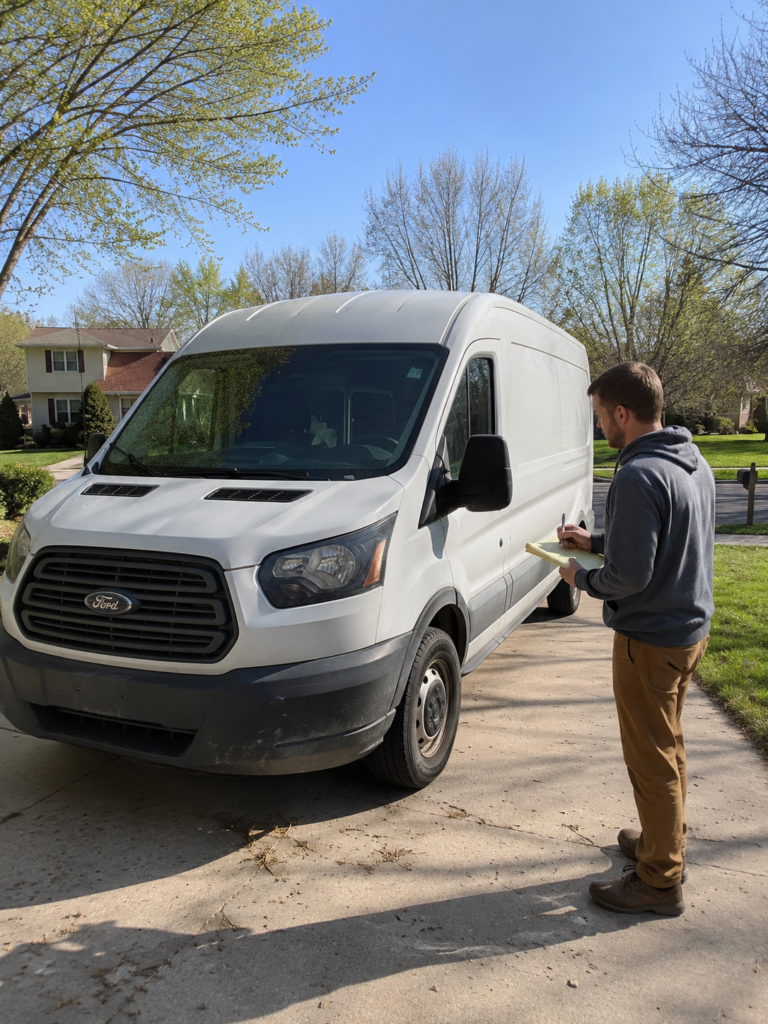
Let’s be straight with you from the start: $20,000 in 2025 is not going to get you a two-year-old, low-mileage Sprinter with a professional conversion. The used van market has been through significant inflation since 2020, and prices haven’t fully come back down.
What $20,000 will get you is a solid, driveable van in the 2012–2018 range with somewhere between 100,000 and 180,000 miles on the clock, depending on the make and the market in your area. Some will have a basic conversion already in place — a bed platform, some storage, maybe a small kitchen setup. Others will be bare cargo vans waiting for you to build them out.
The compromises at this budget are real but manageable. You might have some cosmetic wear — a scuffed bumper, a small dent, seats that have seen better days. You might be buying from a private seller rather than a dealer, which means no warranty safety net. You might be looking at a diesel engine with higher mileage rather than a lower-mileage petrol.
None of these things are dealbreakers. Plenty of people have driven $12,000 vans across continents and back. What matters is finding a mechanically sound vehicle with a good service history and no hidden rust — and we’ll get to exactly how to do that.
The Best Van Models to Look For
Ford Transit
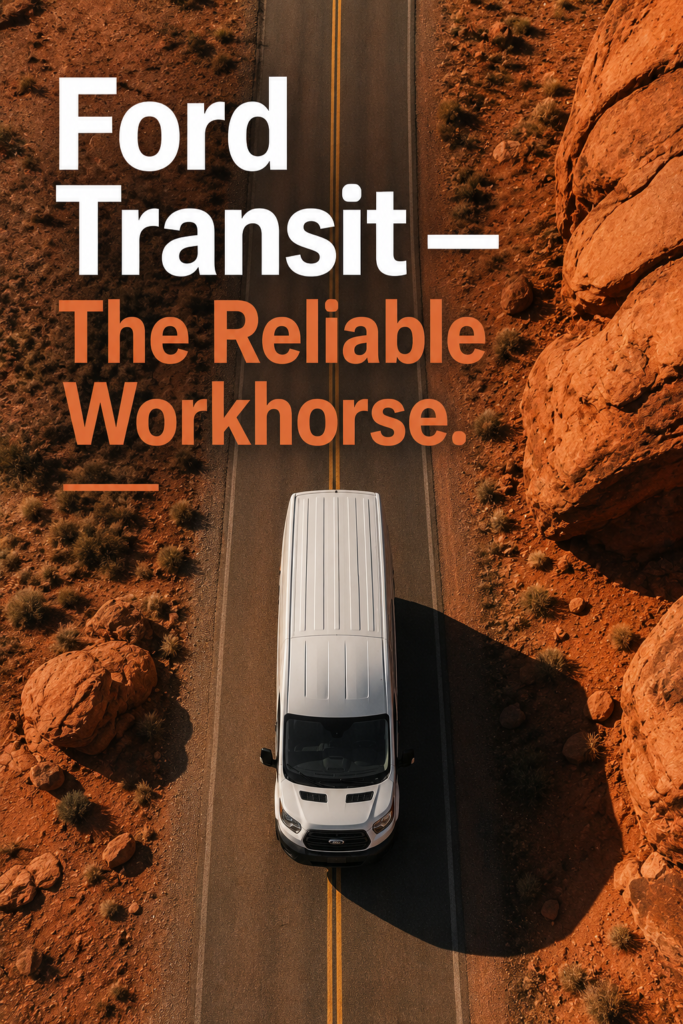
The Ford Transit is probably the single best value used van on the American market right now. It’s widely available, parts are inexpensive, and almost any mechanic knows how to work on it — which matters enormously when you’re 400 miles from the nearest specialist. In the $15,000–$20,000 range you can find medium or high-roof Transits from around 2015–2018, often with 100,000–150,000 miles. The high-roof version is the sweet spot for van life: you can stand up straight, which sounds minor until you’ve spent a week in a van where you can’t. The 3.7L petrol is reliable and cheaper to maintain than the EcoBoost. If you find one with a good service history in this range, buy it.
Mercedes Sprinter
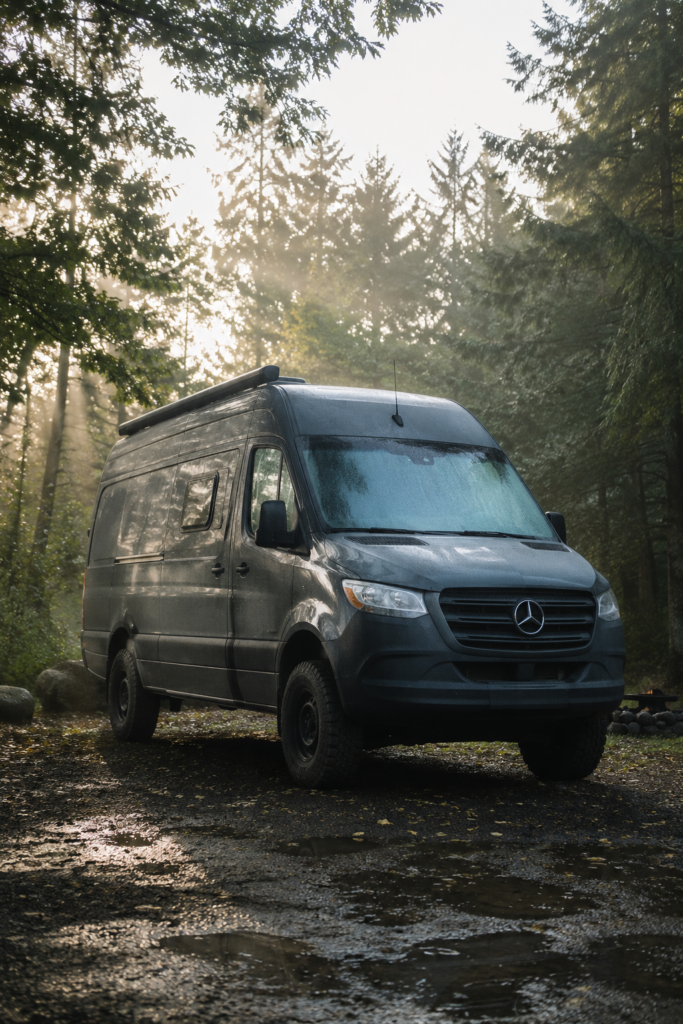
The Sprinter is the aspirational choice for good reason — it’s well-built, drives well, and the high-roof 144″ wheelbase gives you an extraordinary amount of usable space. At $20,000, you’re looking at older models (2012–2015) with higher mileage, and here’s the honest caveat: Sprinter diesel engines can develop expensive problems, particularly around the DEF (diesel exhaust fluid) system and the transmission on older models. If you go Sprinter, spend the money on a pre-purchase inspection. A mechanically clean Sprinter in this range is a wonderful buy. A Sprinter with hidden issues is a money pit. Know the difference before you commit.
Ram ProMaster
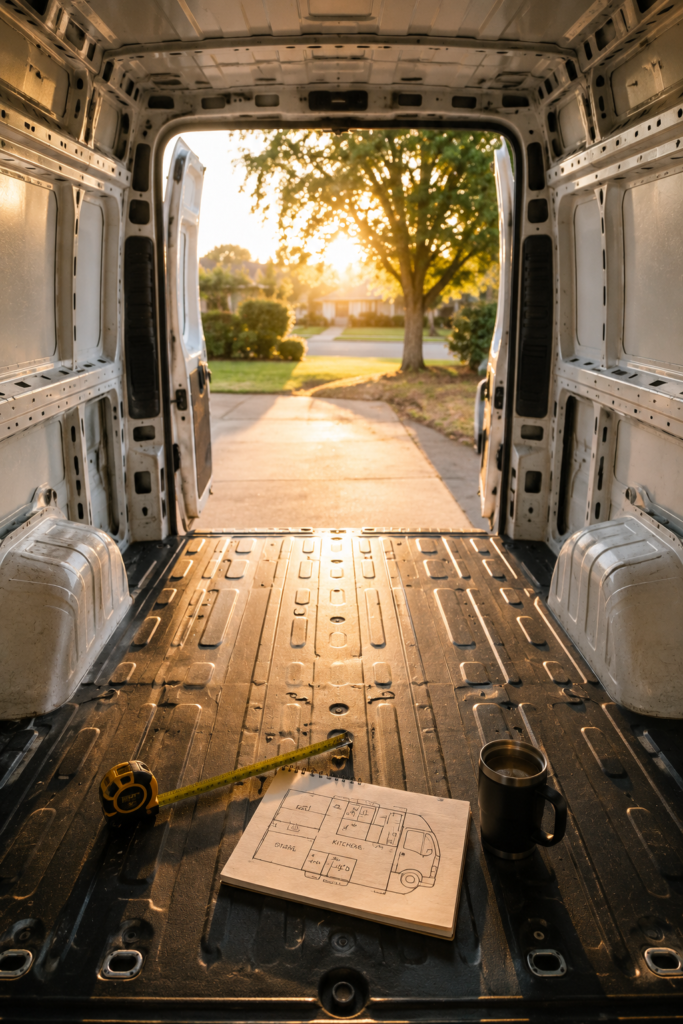
The ProMaster is the underrated option that deserves more attention. It’s front-wheel drive — unusual for a van — which makes it slightly better in slippery conditions and gives you a completely flat load floor, which simplifies a van build considerably. Parts are cheap, dealers are everywhere, and you can find well-maintained ProMasters in the $13,000–$18,000 range with reasonable mileage. It doesn’t have the cool-factor cachet of a Sprinter, but for a first van life build, it’s an excellent practical choice that leaves you more budget for the conversion itself.
Volkswagen Transporter (T5 / T6)

If you’re in Europe or open to importing, the VW Transporter is almost the default choice for good reason. The T5 (2003–2015) and T6 (2015–2019) are both robust, well-supported by an enormous aftermarket, and available in hundreds of configurations. A clean T5 with a professional camper conversion can be found for under $20,000, and there are specialist conversion companies across the UK and Europe that have been doing this for decades. The TDI diesel engines are generally reliable and economical. The main downside compared to American vans is size — Transporters are significantly smaller, which can feel tight for extended full-time living but suits weekend and part-time van life very well.
Toyota HiAce / Nissan NV200

If your budget is at the lower end of the range — say $10,000–$15,000 — or you want something more fuel-efficient and easier to park, the Toyota HiAce and Nissan NV200 deserve serious consideration. Both are smaller than the Transit or Sprinter, but Toyota’s legendary reliability means a high-mileage HiAce can still have years of life in it. The NV200 is compact, efficient, and surprisingly buildable — many solo travelers have created genuinely clever micro-kitchens and sleeping setups in one. For a single person doing part-time van life, either of these at $10,000–$14,000 leaves real money in the budget for a proper conversion.
Converted vs. Unconverted — Which Is Better Value?
This question has no single right answer, and anyone who tells you otherwise is selling something.
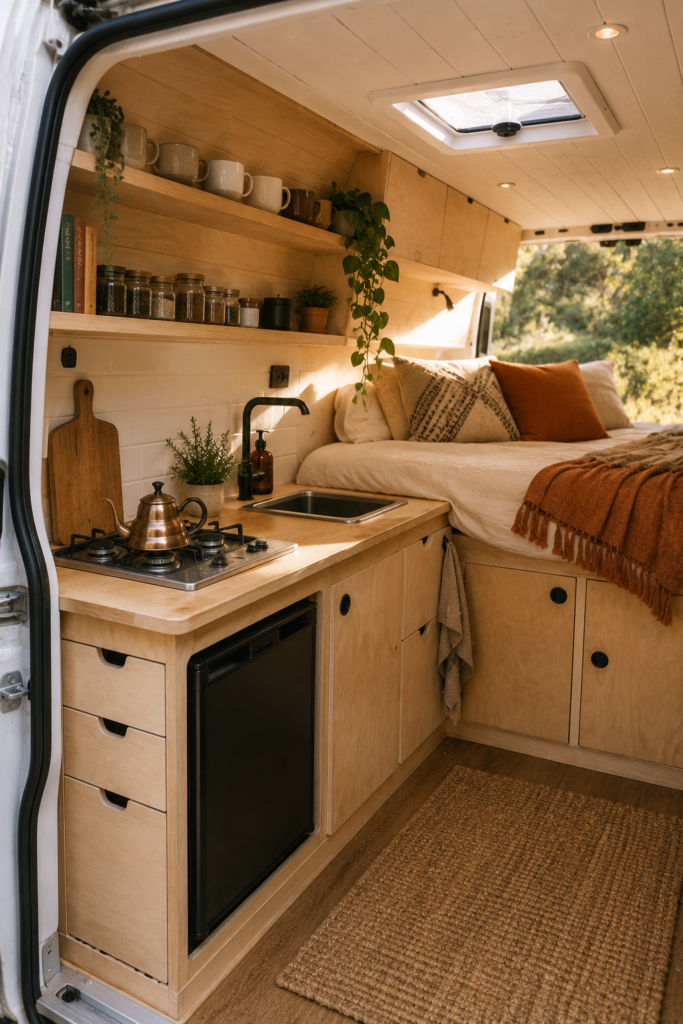
A converted van gives you the ability to live in it immediately. No months of weekends with a drill and a YouTube tutorial, no sleeping in an unfinished shell while you figure out the electrics. If the conversion has been done well — proper insulation, a functional kitchen, a comfortable bed, solar and a leisure battery — you’re getting real value for money. The problem is that many amateur conversions look fine on the surface and hide poor insulation, badly routed wiring, or structural issues under the panelling. When buying a converted van, you’re taking the previous owner’s workmanship on trust.

A bare cargo van gives you complete control. You insulate it properly, you run the wiring exactly where you want it, you build the kitchen to suit your cooking habits. The build takes time — typically three to six months of part-time work for a first-timer — and costs money on top of the purchase price. But you know exactly what’s inside your walls, and that peace of mind is genuinely valuable.
The practical middle ground: buy a van with a basic conversion — a bed platform and some storage — at a lower price, then improve and add to it over time. This gets you on the road quickly without the full commitment of either a finished conversion or a complete bare build.
What to Check Before You Buy
This section could save you thousands of dollars. Take it seriously.
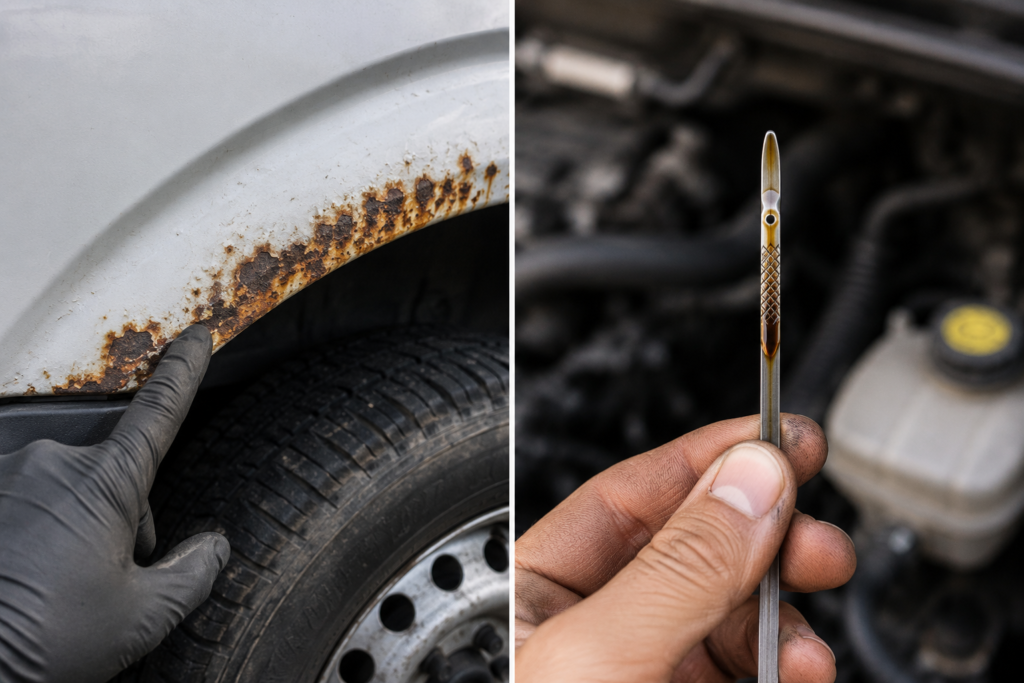
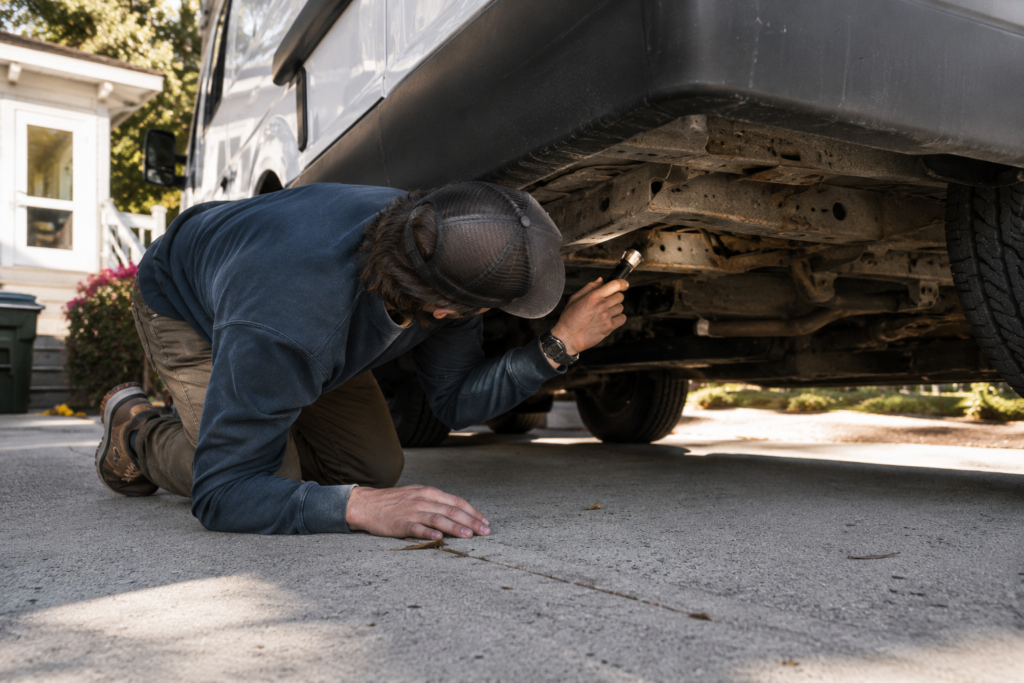
Rust. Get underneath the van and look at the chassis rails, the wheel arches, the floor. Surface rust is normal and manageable. Deep, structural rust — particularly on the chassis — is a reason to walk away entirely. Check inside the rear doors at the bottom edge, and the door frames. These are the spots that hold water.
Roof integrity. If the van has a high roof, get someone to look at the seam where the roof join meets the body. Any signs of water ingress — bubbling paint, damp patches on the inside ceiling — means water damage, and water damage in a van is expensive and miserable to fix.
Engine condition. Start it from cold. Listen for knocking, rattling, or any smoke from the exhaust other than brief white condensation on a cold morning. Check the oil — it should be clean and at the right level. Milky or foam-like oil means coolant contamination, which often means head gasket problems.
Service history. A van with stamped service records at regular intervals is worth paying more for than a slightly cheaper one with “I always looked after it” and no paperwork.
Previous use. Rental history, airport shuttle use, and high-commercial-mileage work all mean harder use than typical private ownership. High mileage on its own isn’t necessarily a problem — a well-maintained 180,000-mile van can be better than a neglected 80,000-mile one. Use plus neglect is the real problem.
Red flags to walk away from. Fresh paint on isolated panels (hiding damage or rust repair), a seller who won’t let you take it to a mechanic, any resistance to a pre-purchase inspection, and prices significantly below market value with vague explanations.
Spend $100–$150 on a pre-purchase inspection from an independent mechanic. It is the best money you will spend in this entire process.
Where to Find the Best Deals

Facebook Marketplace is currently the single most productive hunting ground for used vans, particularly private sales. You’ll find everything from bare cargo vans to fully converted builds, and the search filters let you narrow by distance, price, and make efficiently.
Craigslist still has good inventory in many markets, particularly for older vehicles and in rural areas where competition is lower. Worth checking regularly if your market is slow.
Specialist van life communities — forums like the Sprinter Source forum, the Transit USA forum, and van life Facebook groups — occasionally have members selling directly. These sellers generally understand what buyers are looking for and maintain their vehicles accordingly.

Dealer vs. private sale. A dealer will typically cost you 10–20% more than a private seller for the same vehicle, but offers some buyer protection and the option of a limited warranty on older stock. For a first van purchase where you’re less confident assessing condition, a reputable dealer can be worth the premium.
Seasonal timing. Prices tend to soften in autumn and winter as demand drops — most people start their van life journey in spring and summer. If you can wait until November or December to buy, you’ll typically find more motivated sellers and lower prices.
Hidden Costs to Budget For

Whatever you spend on the van, keep at least $3,000–$5,000 in reserve. Here’s why.
Insurance. Camper van insurance is a specialist product and can be more expensive than standard vehicle insurance, particularly if you’re planning full-time living. Get quotes before you commit to a purchase.
Registration and taxes. Depending on your state or country, registration fees and any applicable import or sales tax can add several hundred to over a thousand dollars to your upfront cost.
Immediate repairs. Almost every used van will need something addressed in the first few months — tyres, brakes, belts, filters. Budget for it rather than being surprised by it.
Build-out costs. If you’re converting a bare van, a basic but functional build — insulation, panelling, bed platform, basic kitchen — can be done for $1,500–$3,000 with careful sourcing and your own labour. A more complete build with solar, a proper electrical system, and fitted cabinetry will run $4,000–$8,000 even doing the work yourself.
Ready to Find Your Van?
$20,000 is genuinely enough to start this. Not enough to have everything perfect from day one — but enough to get on the road in a solid, reliable vehicle and build from there. Van life is iterative by nature. Nobody’s setup is perfect at the start, and that’s completely fine.
The best van is the one you actually buy and drive. Don’t let the search for perfection keep you parked in your driveway.
Have you already bought a used van on a budget? We’d love to hear what you got, what you paid, and what you’d do differently. Drop your story in the comments below — this community learns best from people who’ve actually done it.
And if you’ve just found your van and you’re starting to think about the build, our next post is exactly what you need: the smartest camper van kitchen storage ideas that actually work in real life — not just in Pinterest photos.
Thinking about converting your van yourself? Our complete guide to van kitchen storage solutions is coming soon. Subscribe so you don’t miss it.