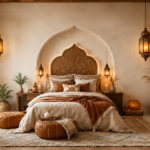

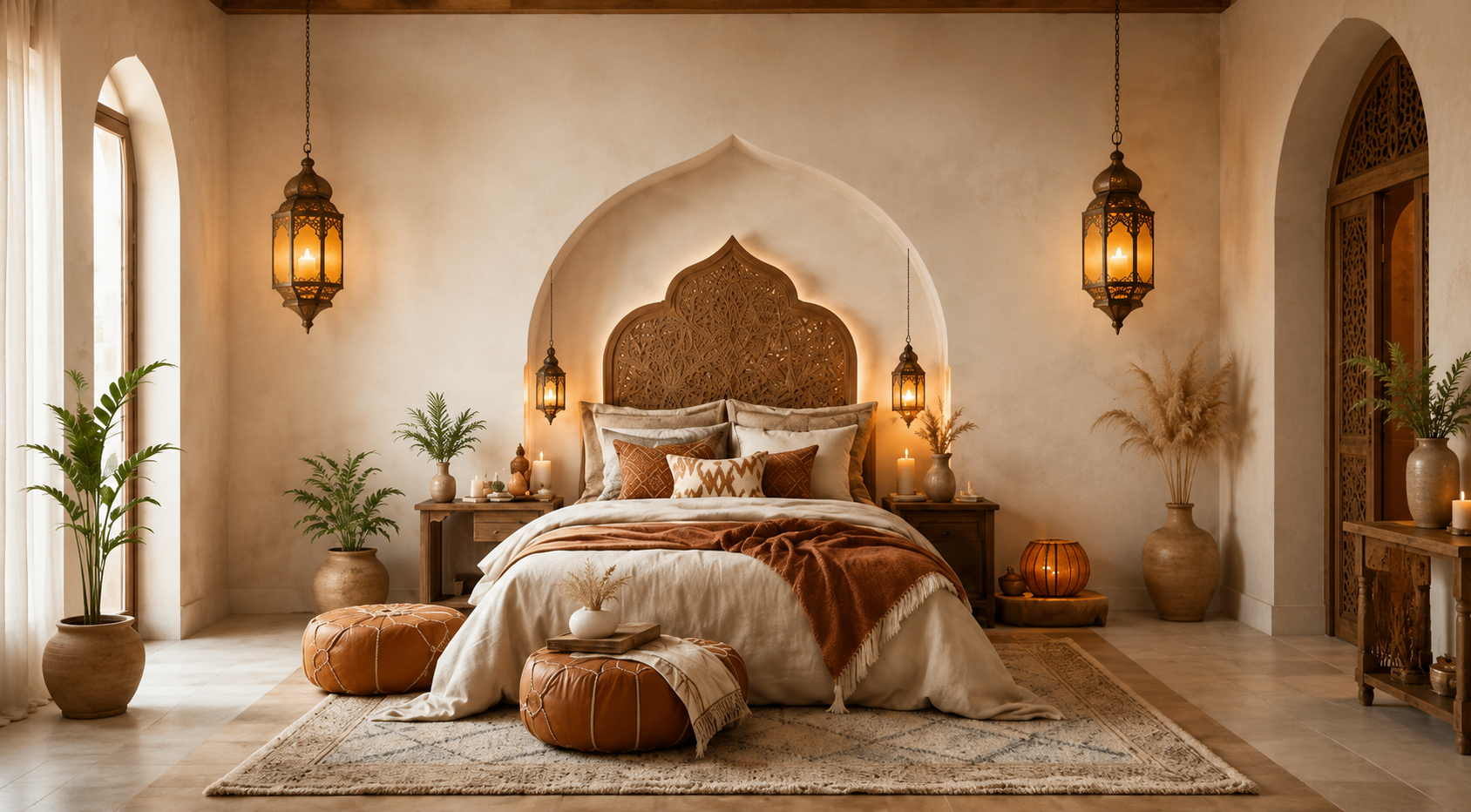
Transform your bedroom into a warm, inviting sanctuary inspired by the timeless beauty of Moroccan design. With rich textures, handcrafted details, earthy colors, and ambient lighting, a Moroccan-inspired bedroom offers the perfect balance of luxury, comfort, and cultural charm.
Layered Textiles for Comfort and Luxury
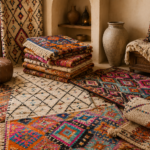
One of the defining characteristics of Moroccan interior design is the abundant use of layered textiles. Rather than relying on a single bedding set or decorative piece, Moroccan bedrooms embrace a carefully curated mix of fabrics, textures, and layers that create warmth and visual depth.
Linen Bedding as the Foundation
Start with high-quality linen bedding in neutral shades such as cream, ivory, or warm beige. Linen provides a relaxed, lived-in appearance that perfectly complements the organic nature of Moroccan decor. Its breathable texture also makes it practical for year-round comfort.
A soft linen duvet paired with matching pillowcases creates an inviting foundation that feels effortlessly luxurious. The slightly wrinkled texture of linen adds character and authenticity to the space.
Decorative Throw Pillows
Moroccan-inspired bedrooms often feature multiple decorative pillows arranged in layers. Mix different sizes, textures, and patterns to create visual interest.
Look for:
- Geometric designs
- Embroidered details
- Tassel accents
- Berber-inspired motifs
- Earth-toned fabrics
Stack larger pillows behind smaller accent cushions to create a plush and welcoming bed arrangement.
Moroccan Poufs
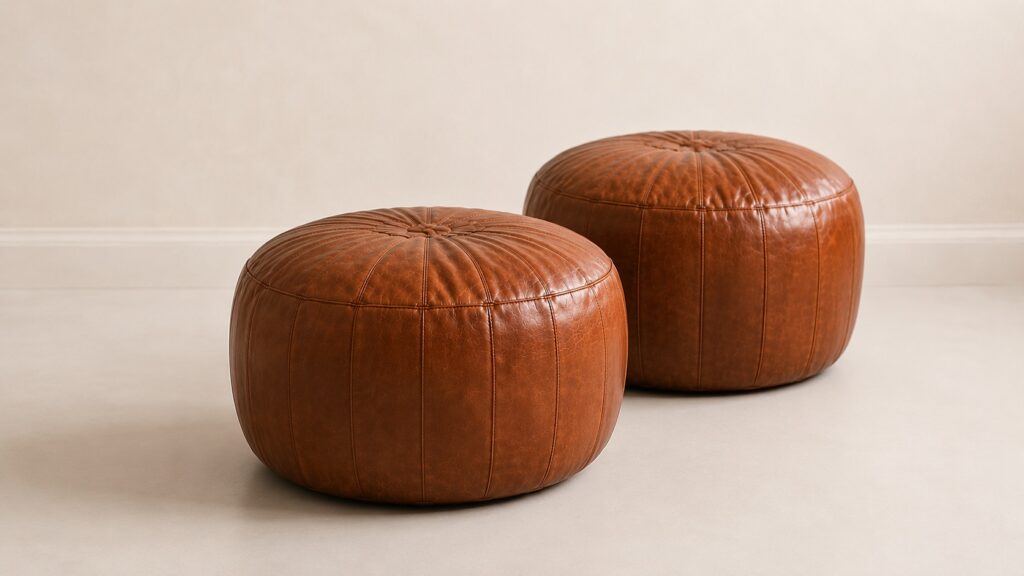
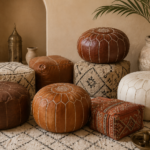
Moroccan poufs are both decorative and functional. These versatile pieces can serve as footrests, additional seating, or decorative accents.
Leather poufs in terracotta, caramel, or cognac tones are especially popular because they add warmth and handcrafted character to the room.
Place one or two poufs near the foot of the bed or beside a reading chair to enhance the layered aesthetic.
Textured Throws and Blankets
Drape chunky knit throws, woven blankets, or tasseled textiles across the bed for added comfort and style.
Layering textiles creates:
- Visual depth
- Increased comfort
- Enhanced warmth
- A luxurious, designer-inspired appearance
The result is a bedroom that feels cozy, collected, and inviting.
Moroccan Color Palette
The color palette is one of the most important aspects of Moroccan design. Inspired by desert landscapes, ancient architecture, and natural materials, Moroccan interiors rely on warm, earthy hues that create a soothing environment.
Terracotta
Terracotta serves as a signature Moroccan color. Reminiscent of clay walls and traditional pottery, it brings warmth and richness to the space.
Use terracotta through:
- Throw pillows
- Bedding accents
- Decorative pottery
- Area rugs
Clay
Soft clay tones provide depth without overwhelming the room. These subtle earthy shades work beautifully on walls, textiles, and decorative accessories.
Warm Beige
Warm beige acts as a grounding neutral that balances bolder accent colors. It also helps create a serene atmosphere.
Cream
Cream tones brighten the room and enhance natural light. Cream bedding and curtains help create an airy, luxurious appearance.
Dusty Rose
Dusty rose introduces a subtle touch of romance and softness while maintaining the earthy aesthetic associated with Moroccan interiors.
Olive Green
Inspired by Moroccan landscapes and traditional gardens, olive green adds a refreshing natural element.
Use olive green through:
- Plants
- Accent pillows
- Decorative ceramics
- Upholstered furniture
Creating Harmony
Combining these colors creates a layered, sophisticated palette that feels warm and inviting while remaining elegant and timeless.
Statement Carved Wood Features
Moroccan interiors are known for their incredible craftsmanship, particularly when it comes to woodwork.
A beautifully carved wooden feature instantly transforms an ordinary bedroom into a dramatic focal point.
Intricately Carved Headboards
A carved wooden headboard often serves as the centerpiece of a Moroccan-inspired bedroom.
Traditional designs may include:
- Geometric patterns
- Floral motifs
- Arabesque detailing
- Hand-carved latticework
The craftsmanship adds visual richness and architectural interest.
Decorative Wall Panels
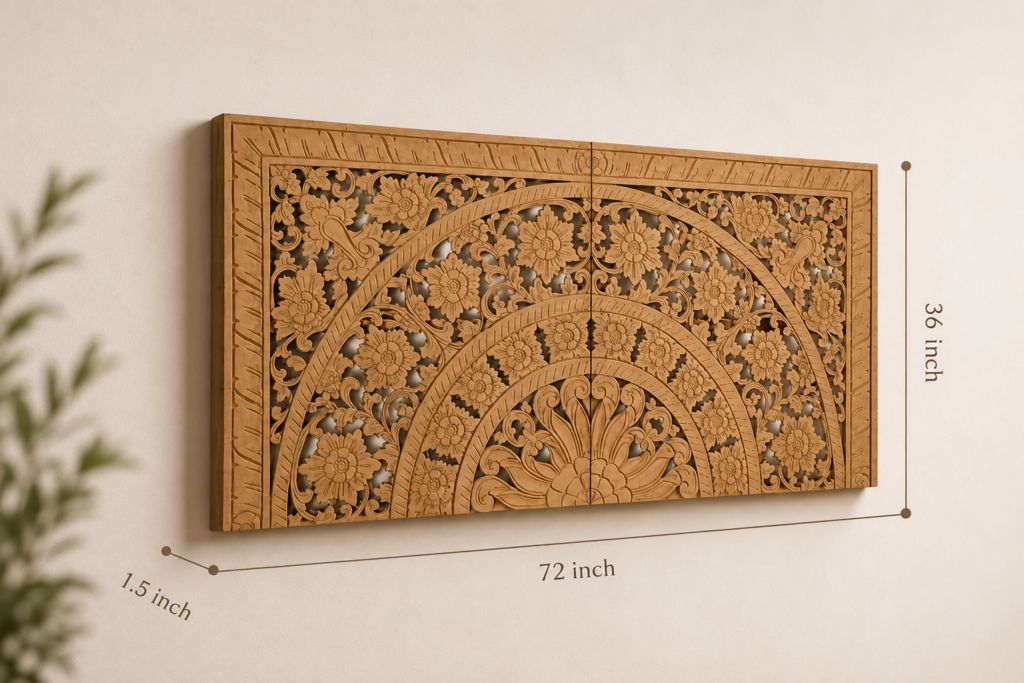
Carved wood wall panels positioned behind the bed create a stunning statement wall.
These panels provide:
- Texture
- Dimension
- Cultural authenticity
- Visual sophistication
Handcrafted Wooden Furniture
Complement the headboard with handcrafted furniture such as:
- Bedside tables
- Dressers
- Benches
- Storage chests
Choose warm wood finishes that highlight the natural grain and artisan craftsmanship.
Moroccan Lantern Lighting
Lighting is one of the most magical aspects of Moroccan design.
Traditional lanterns create a warm glow that instantly transforms a bedroom into a cozy retreat.
Iron and Glass Lanterns
Authentic Moroccan lanterns are often crafted from:
- Iron
- Brass
- Colored glass
- Clear glass
Their intricate cutout patterns cast beautiful shadows across walls and ceilings.
Hanging Lanterns
Suspended lanterns create visual drama and establish a strong Moroccan aesthetic.
Consider:
- Hanging lanterns beside the bed
- Ceiling-mounted lanterns
- Corner lantern arrangements
Bedside Lanterns
Replace conventional table lamps with Moroccan lanterns for a more authentic look.
Their warm illumination creates a relaxing nighttime atmosphere.
Candlelit Accents
Candles amplify the romantic ambiance and provide soft, flickering light.
Display candles inside lanterns or on decorative trays to enhance the room’s warmth and intimacy.
Textile Patterns and Moroccan Motifs
Pattern plays a major role in Moroccan design.
By incorporating traditional motifs, you can add authenticity and visual energy to your bedroom.
Geometric Patterns
Moroccan design frequently features geometric shapes arranged in intricate repeating layouts.
Common examples include:
- Diamonds
- Triangles
- Lattice patterns
- Interlocking motifs
Berber-Inspired Designs
Berber textiles are celebrated for their simplicity and symbolic patterns.
Their handwoven appearance adds authenticity and cultural depth.
Handwoven Fabrics
Handcrafted textiles bring individuality and texture to the room.
Use them through:
- Pillows
- Blankets
- Rugs
- Wall hangings
Layering Patterns Successfully
Mix patterns while maintaining cohesion by:
- Keeping a consistent color palette
- Combining large and small-scale prints
- Repeating colors throughout the room
This approach prevents visual clutter while preserving a curated look.
Natural Materials and Organic Decor
Natural materials help create the relaxed, grounded atmosphere associated with Moroccan interiors.
Rattan Furniture
Rattan chairs and accent furniture add texture and a light, airy feel.
Popular choices include:
- Reading chairs
- Accent stools
- Side tables
Clay Pottery
Handcrafted clay vessels contribute warmth and authenticity.
Display pottery in varying heights for added visual interest.
Brass Accents
Brass details introduce subtle elegance and complement the warm color palette.
Consider:
- Decorative trays
- Mirrors
- Candle holders
- Hardware
Woven Baskets
Woven baskets provide both storage and decoration.
Use them to store:
- Blankets
- Pillows
- Magazines
- Plants
Natural Fiber Rugs
Natural fiber rugs help anchor the room while adding texture underfoot.
Look for:
- Jute rugs
- Wool rugs
- Handwoven Moroccan rugs
Pampas Grass and Greenery
Organic decor elements soften the space and introduce natural beauty.
Popular choices include:
- Pampas grass
- Olive branches
- Palm fronds
- Potted greenery
These details bring life and movement into the room.
Warm Ambient Lighting
Creating the right lighting environment is essential for achieving a cozy Moroccan atmosphere.
Layer Multiple Light Sources
Instead of relying on a single overhead fixture, combine several light sources throughout the room.
Lantern Lighting
Lanterns serve as both decorative accents and functional illumination.
Candles
Candles create intimacy and warmth while enhancing the room’s sensory experience.
Soft Bedside Lighting
Use warm bedside lighting for reading and relaxation.
Warm-Toned Bulbs
Choose bulbs with warm color temperatures to create a golden glow rather than harsh white light.
Layering these sources results in a soothing environment ideal for rest and relaxation.
Styling the Perfect Moroccan Bedroom
Once the major design elements are in place, thoughtful styling brings everything together.
Arrange Poufs Around the Bed
Position poufs strategically:
- At the foot of the bed
- Beside a reading corner
- Near a window seat
This creates balance and functionality.
Mix Patterns with Intention
Combine:
- Geometric motifs
- Berber designs
- Textured solids
Maintain consistency through color repetition.
Choose Complementary Accessories
Select accessories that reinforce the Moroccan theme, including:
- Brass trays
- Decorative lanterns
- Pottery
- Woven baskets
- Handmade textiles
Create a Luxurious Yet Relaxed Look
The goal is not perfection but comfort and character.
Focus on:
- Layering textures
- Mixing handcrafted pieces
- Incorporating natural materials
- Maintaining visual harmony
The result should feel collected, welcoming, and effortlessly elegant.
A Moroccan-inspired bedroom offers a perfect blend of warmth, craftsmanship, and timeless beauty. By incorporating layered textiles, carved wood details, Moroccan lanterns, geometric and Berber patterns, natural materials, warm ambient lighting, and an earthy color palette, you can create a space that feels both luxurious and deeply inviting.
Whether you’re making a few simple updates or undertaking a complete bedroom transformation, Moroccan design encourages you to embrace texture, artisan craftsmanship, and rich cultural influences. The result is a serene retreat where comfort meets sophistication—a personal sanctuary filled with warmth, character, and enduring elegance.