
Everything you need to know before you step through the gate — and what to do once you do.
There is no gentle introduction to the Marrakech Medina.
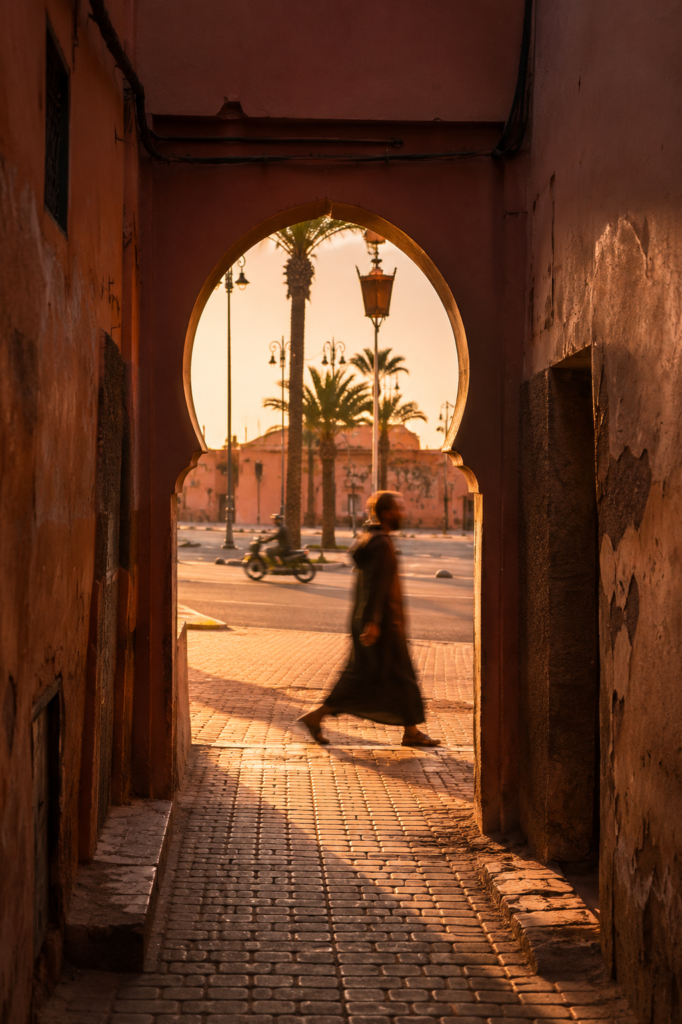
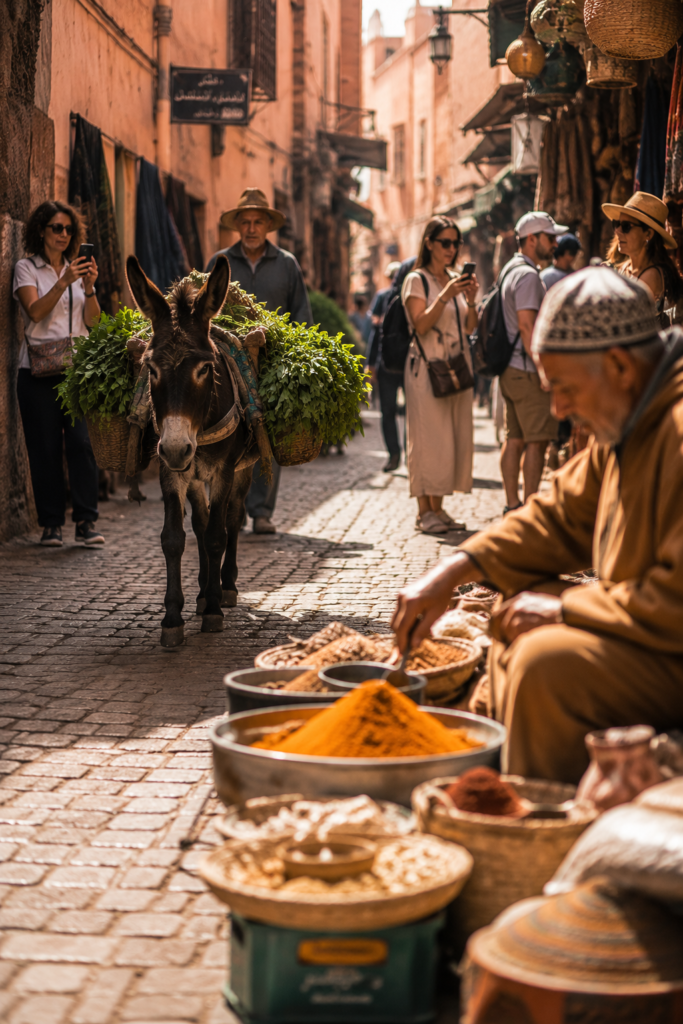
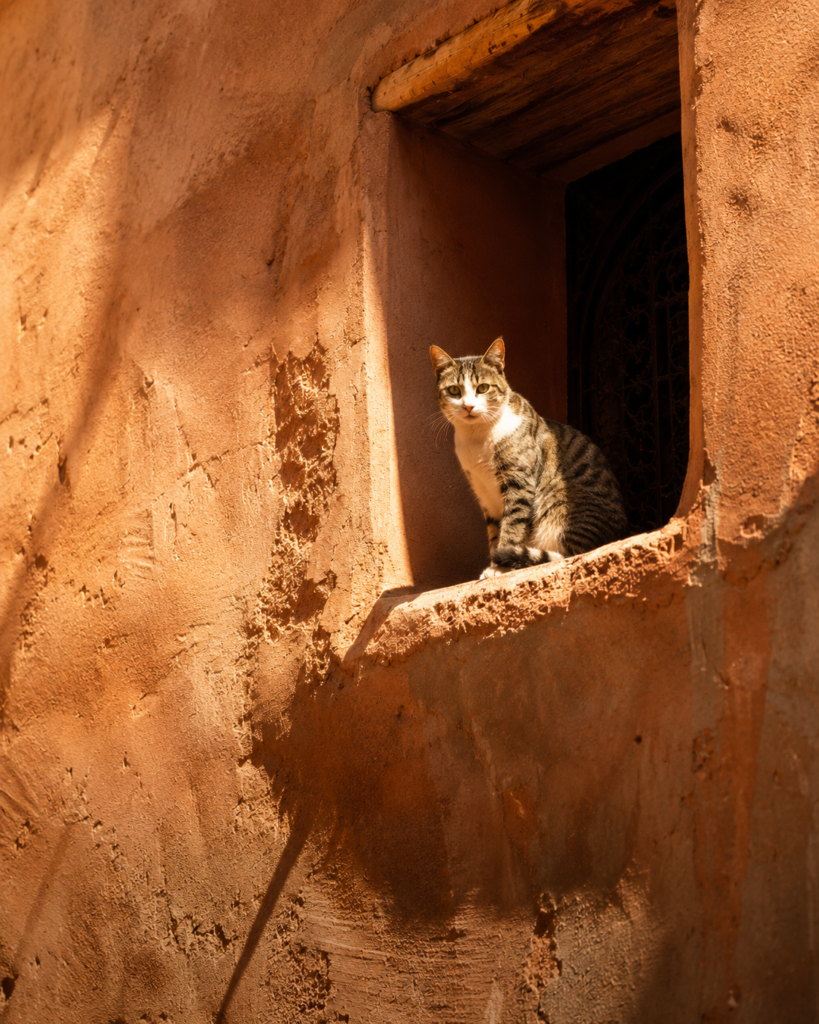
One moment you are on a wide, calm boulevard, taxis humming past, orange juice vendors lining the kerb. You turn through an archway — sometimes barely wide enough for two people — and the city swallows you whole. Motorcycles appear from nowhere. A man leads a donkey loaded with mint through a crowd of tourists consulting Google Maps. The smell of cumin, leather, and woodsmoke hits you simultaneously. Someone is playing a guembri somewhere nearby. A cat watches everything from a warm windowsill with complete indifference.
It is overwhelming. It is magnificent. And if you have never been before, it can feel genuinely disorienting in a way that no amount of research quite prepares you for.
This guide exists to change that. Not to tame the Medina — nothing should tame it — but to give you enough orientation, practical knowledge, and cultural context that you can walk in with confidence and actually enjoy the experience rather than spending the first day in a low-grade panic about being lost.
Which, for the record, you will be. Repeatedly. But by the end of this guide, you will understand why getting lost in the Marrakech Medina is actually one of its greatest gifts.
What Is the Medina, Exactly?
The word medina simply means “city” in Arabic. In Morocco, it refers specifically to the old walled city — the historic urban core that predates modern town planning by centuries. Marrakech’s Medina was founded in 1070 by the Almoravid dynasty and has been continuously inhabited ever since.
In 1985, UNESCO designated the Marrakech Medina a World Heritage Site — recognizing it as one of the best-preserved medieval Islamic cities in the world. Within its ochre-pink walls live approximately 200,000 people, going about daily life in a urban fabric that has changed remarkably little in its fundamental structure over nearly a thousand years.
It covers roughly 600 hectares and contains somewhere between 4,000 and 6,000 narrow streets and alleyways — the precise number depending on how you count the ones that dead-end into private courtyards. There is no grid. There is no logic that an outsider can immediately decode. The Medina grew organically over centuries, shaped by family territories, water channels, trade routes, and the simple human need to get from one place to another in the shade.
This is what makes it extraordinary. And this is what makes it confusing.
Before You Go: Essential Preparation
Download Offline Maps
Google Maps works reasonably well in the Medina, but connectivity can be patchy in the deeper alleyways. Download the Medina area for offline use before you arrive. Even better, download Maps.me as a backup — it uses OpenStreetMap data which tends to be more detailed in the Medina’s narrow lanes. Neither app is perfect, but between them you will rarely be completely lost.
Dress Appropriately
The Marrakech Medina is a living, working Muslim neighborhood — not a theme park. Dressing respectfully is not just courteous, it genuinely changes how you are treated and how comfortable you feel.
For women: shoulders and knees covered are the baseline. Loose trousers or a midi skirt, a light blouse or linen shirt. A scarf carried in your bag is useful for mosques, conservative neighborhoods, or simply staying cool in the shade.
For men: shorts are acceptable in tourist areas but long trousers will earn you noticeably more respectful engagement in the souks and residential quarters.
Avoid very tight or revealing clothing — not because anyone will confront you about it, but because you will feel conspicuous in a way that detracts from the experience.
Wear Comfortable Shoes
This is not negotiable. The Medina’s streets are almost entirely paved with uneven stone, ancient cobbles, or compacted earth. You will walk between 8 and 15 kilometers on a full day of exploring. Wear shoes you would be comfortable hiking in. Leave the sandals for the riad terrace.
Carry Cash
The vast majority of the Medina’s shops, stalls, cafes, and small restaurants operate on cash only. ATMs exist but can be unreliable — withdraw what you need before entering the Medina and keep smaller denominations (20 and 50 MAD notes) easily accessible for small purchases and tips.
Learn a Few Words of Darija
Moroccan Arabic (Darija) is the local language, though French is widely spoken and English increasingly so in tourist areas. A handful of basic phrases will transform your interactions:
- Shukran — Thank you
- La shukran — No thank you (essential in the souks)
- Bslama — Goodbye
- Bshal hadchi? — How much is this?
- La, mashi mushkil — No, no problem (useful all-purpose response)
Even a single word of Darija, pronounced badly, produces genuine warmth. Try.
Orientation: The Medina’s Main Landmarks
Getting oriented in the Medina is less about memorizing streets and more about understanding its key landmarks and how they relate to each other. Think of these as your compass points.
Djemaa el-Fna — The Heartbeat of the Medina
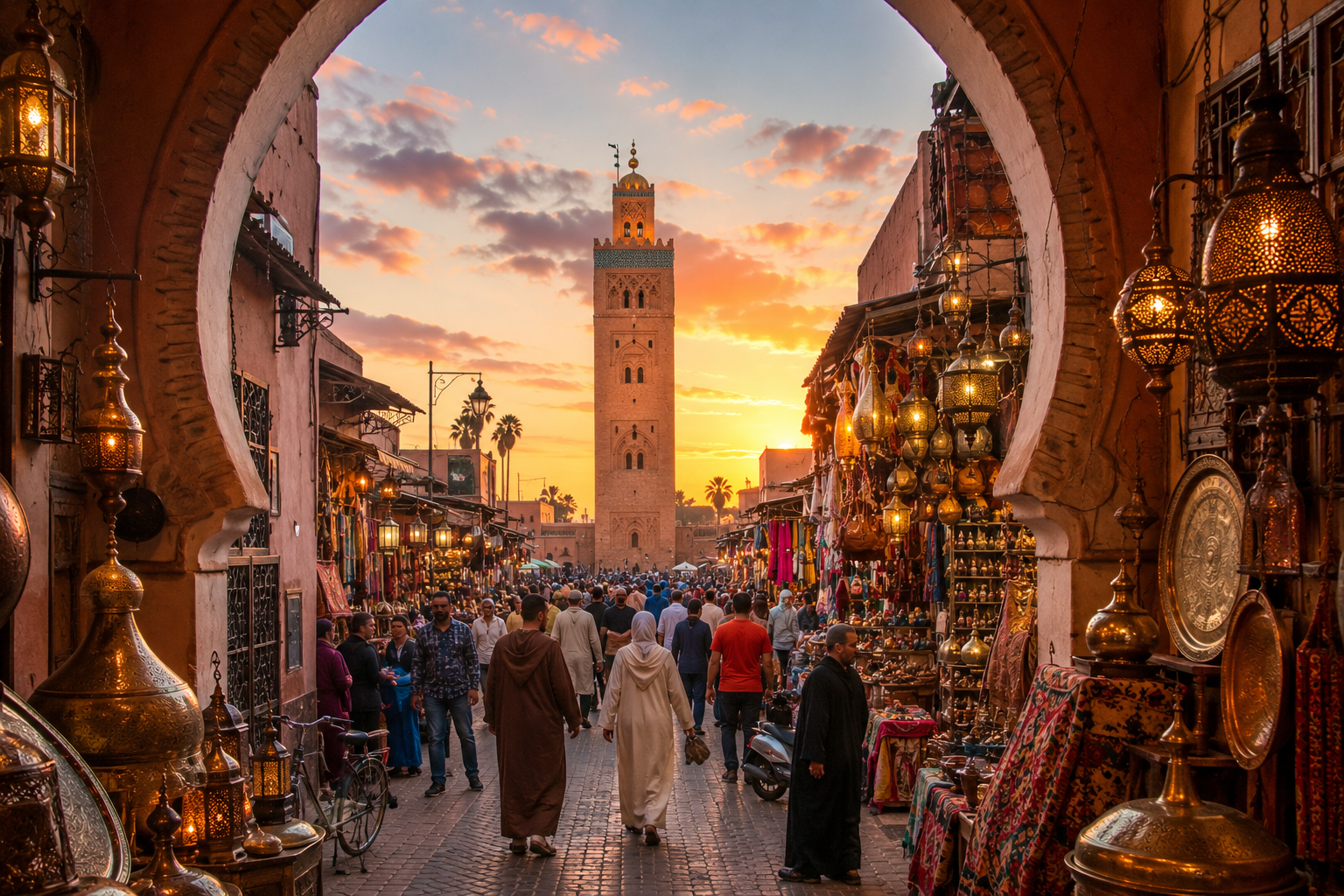
The great square at the center of the Medina is your primary reference point. Everything else in the Medina can be understood in relation to it. If you are lost, head for Djemaa el-Fna. If you cannot find Djemaa el-Fna, find the Koutoubia Mosque — its minaret is visible from almost anywhere in the city — and walk toward it. The square is just to its east.
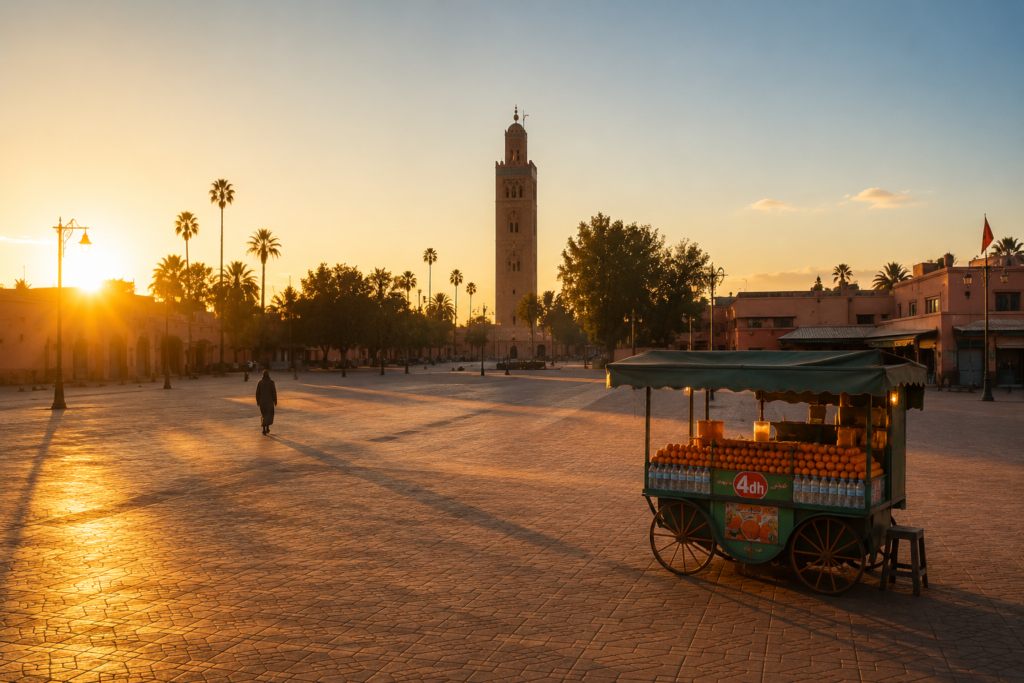
Djemaa el-Fna itself is a UNESCO-listed cultural space — not a building but a practice, a daily gathering that has been happening in more or less the same form for centuries. In the morning it is quiet: orange juice vendors, a few snake charmers setting up. By afternoon it fills with acrobats, storytellers, henna artists, musicians, and food vendors. By evening it becomes one of the most extraordinary open-air performances on earth.
Approach the entertainers with warmth and a clear understanding that they earn their living from tips. Watch, enjoy, tip generously for anything you photograph. Do not feel obligated to engage with anyone who approaches you aggressively.
The Koutoubia Mosque
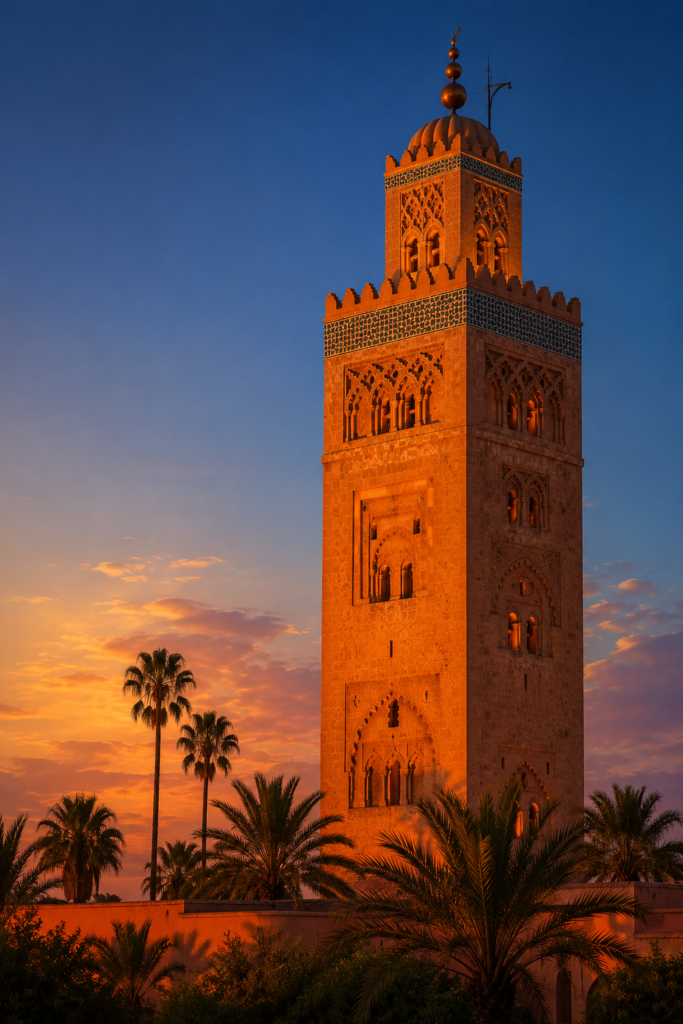
The 12th-century Koutoubia Mosque is Marrakech’s defining landmark — its 70-meter minaret visible across the city and used as a navigational reference by locals and visitors alike. Non-Muslims cannot enter, but the exterior and surrounding gardens are beautiful and worth visiting at golden hour when the minaret glows amber against the sky.
The Souks
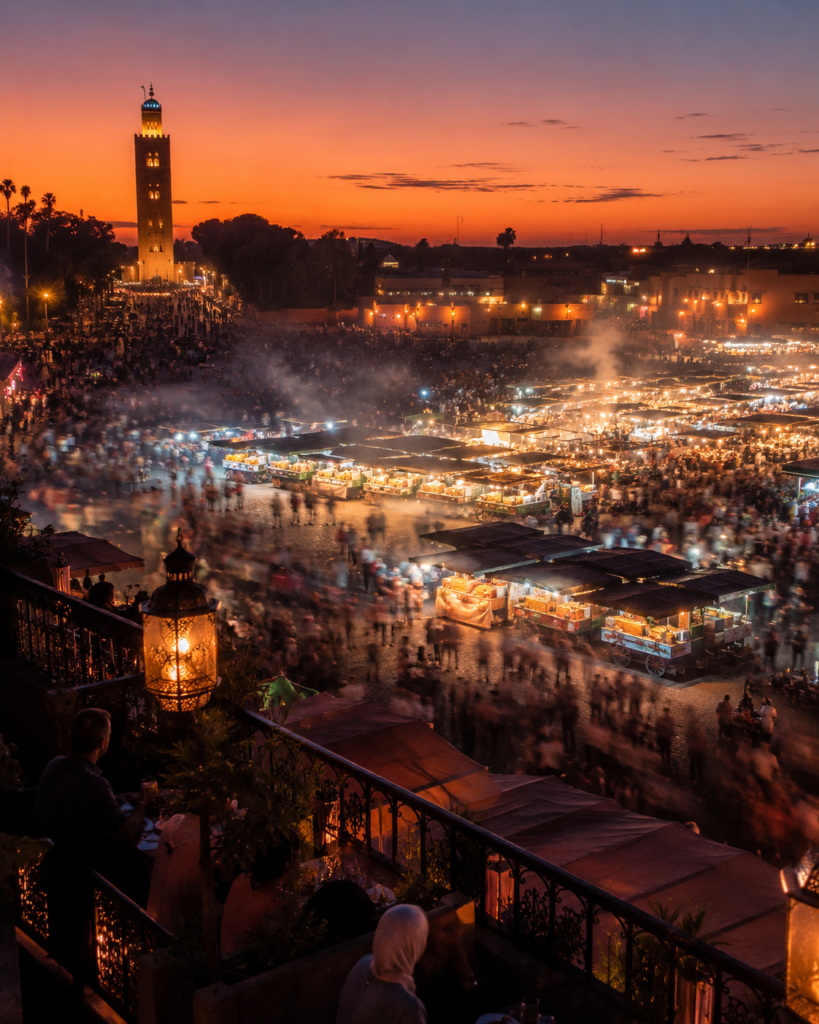
North of Djemaa el-Fna lies the great souk district — a labyrinthine network of covered markets organized, loosely, by trade. The organization is ancient: dyers here, leather workers there, carpenters in that direction, spice merchants in that alley. It is less rigid than it once was, but the broad structure remains and is worth understanding before you dive in.
The Mellah — The Historic Jewish Quarter
Southeast of Djemaa el-Fna, the Mellah is the Medina’s historic Jewish quarter — established in the 16th century and one of the oldest Jewish quarters in Morocco. It has a distinctive architectural character: taller buildings with wrought-iron balconies and shuttered windows that reflect an Iberian influence brought by Sephardic Jewish families who settled here after the expulsion from Spain. The Lazama Synagogue, still functioning, is open to visitors.
The Royal Palace and Mellah Market
The Mellah sits adjacent to the Royal Palace — you cannot enter, but its enormous cedar doors are impressive from outside. The covered Mellah market nearby is one of the least touristy food markets in the Medina and a genuinely rewarding place to buy fresh produce, olives, preserved lemons, and local spices at honest prices.
The Souks: How to Navigate Without Losing Your Mind
The souks of Marrakech are justifiably famous and equally justifiably overwhelming. Here is how to approach them:
Go Without an Agenda First
On your first visit, resist the urge to shop. Simply walk. Look up — the architecture above the stall level is extraordinary. Notice how the light changes as you move from covered to open sections. Watch how goods are organized, how merchants interact with each other, how the whole system functions as a living organism. Shopping comes later, once you have your bearings and your reference points.
The Major Souk Districts
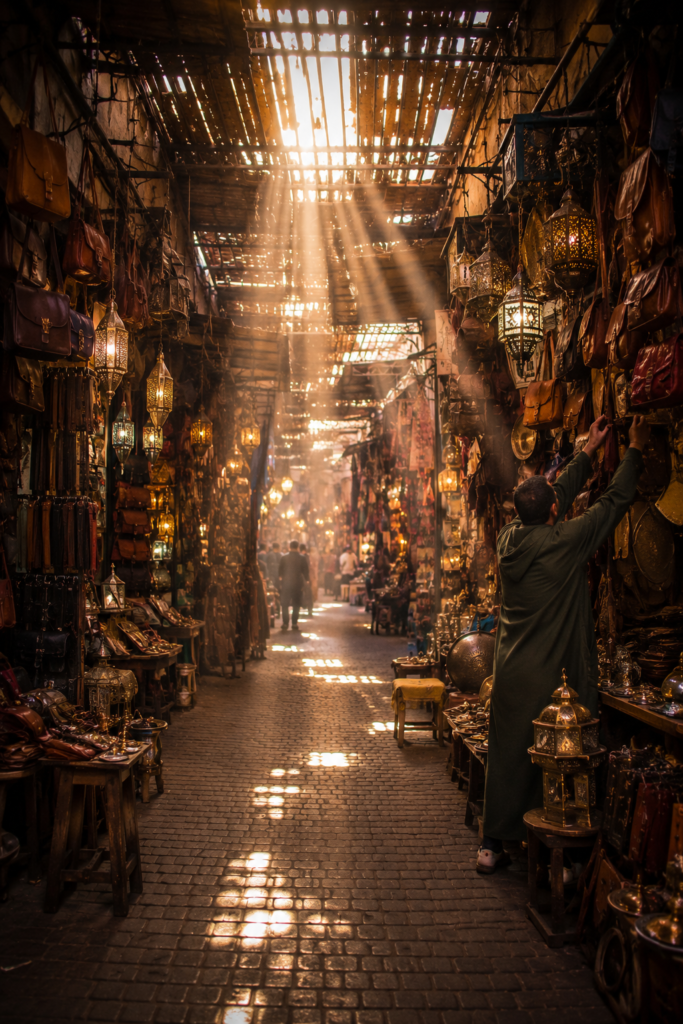
Souk Semmarine: The main artery of the souk district, leading north from Djemaa el-Fna. Broad, well-lit, and lined with leather goods, textiles, and craft items. The most tourist-oriented section — prices are higher but so is the concentration of quality goods.
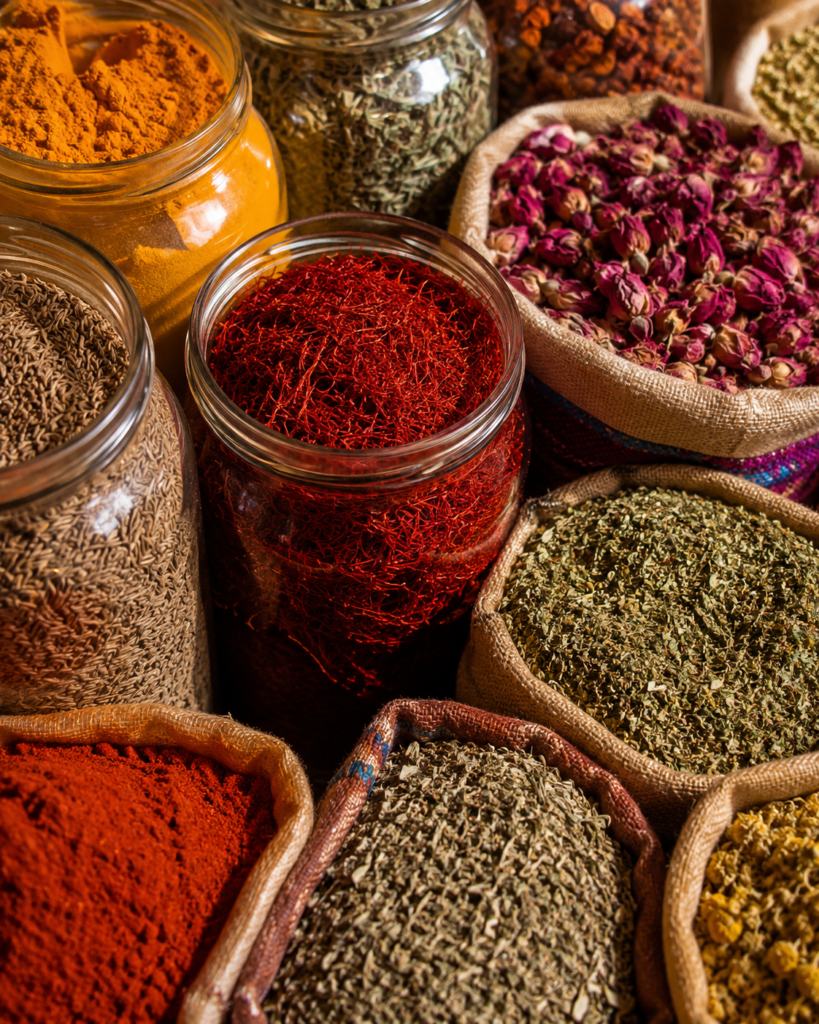
Souk el-Attarine: The spice and perfume souk, branching off Semmarine. Enormous glass jars of cumin, saffron, rose petals, and dried herbs line the stalls. The scent is extraordinary. The saffron quality varies enormously — real Moroccan saffron is deep red and threads are visible; orange powder sold as saffron is not the real thing.
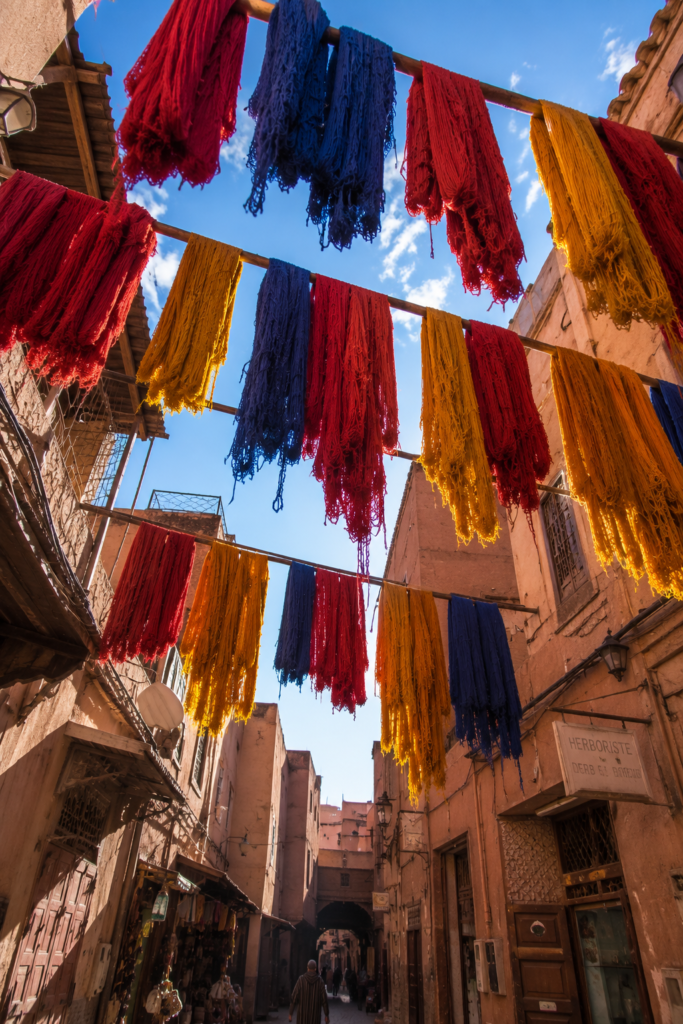
Souk des Teinturiers (Dyers’ Souk): One of the most visually dramatic corners of the entire Medina. Hanks of freshly dyed wool hang from the rooftops in vivid reds, blues, and yellows — the colors dripping down into the narrow street below. Early morning is the best time to visit, when the dyeing is active and the light comes in at an angle through the hanging wool.
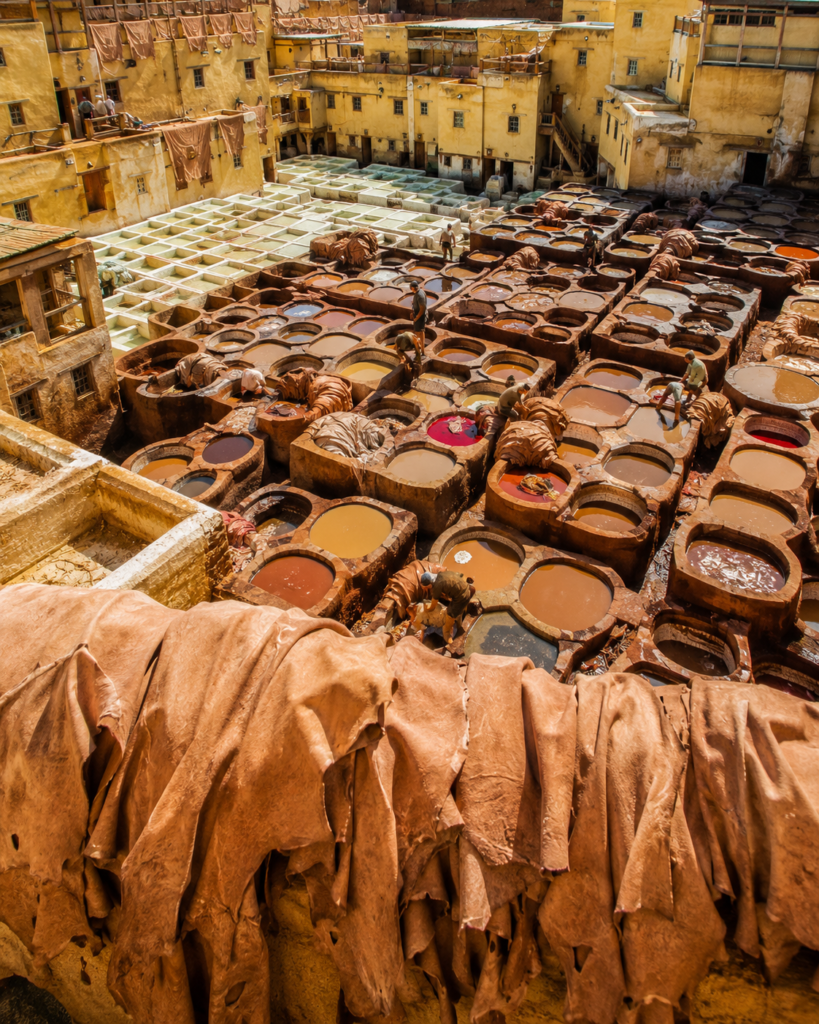
Souk Cherratine: The leather souk, adjacent to the famous tanneries. The tanneries themselves are a working facility — you view them from the rooftop terraces of the surrounding leather shops. Prepare for the smell (ammonia and pigeon dung are used in the tanning process) — shops will offer you sprigs of fresh mint to hold under your nose, which actually helps.
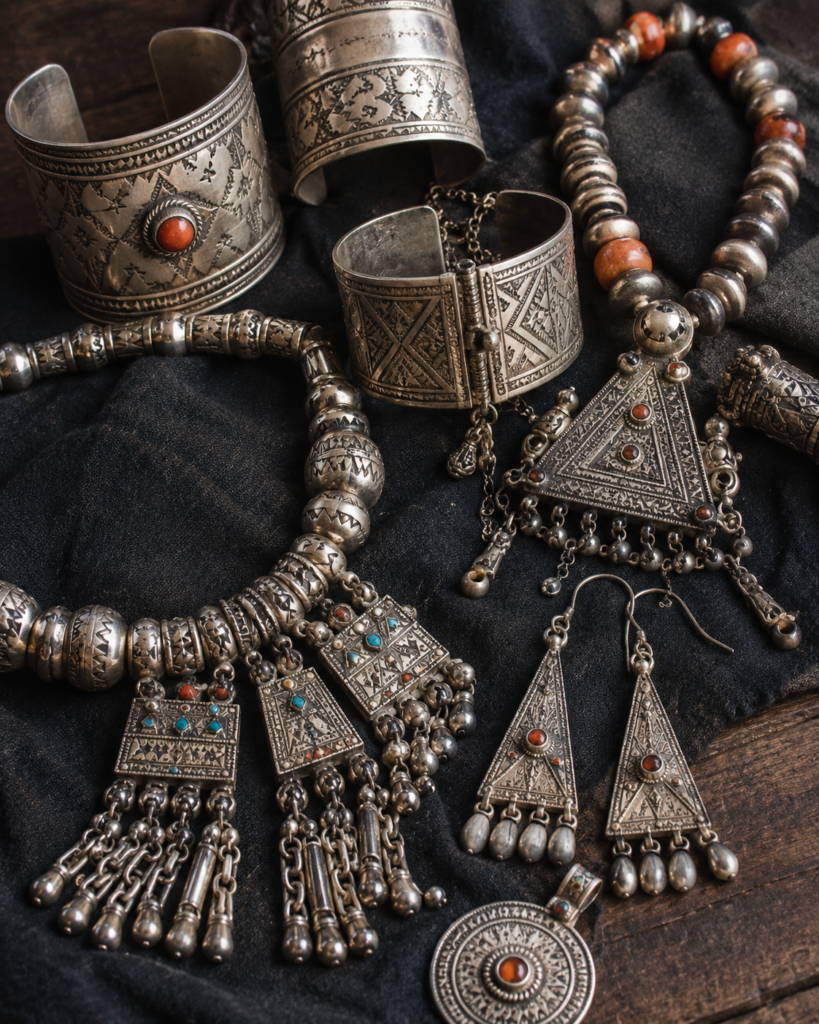
Souk des Bijoutiers: The jewelers’ souk, less visited than the textile and craft areas, and all the better for it. Silver Amazigh jewelry — heavy cuffs, statement necklaces, intricate earrings — is the specialty and the quality can be extraordinary. Take your time here
.
On Bargaining
Bargaining is expected in the souks and is part of the cultural experience — not an adversarial act. A few principles:
Never name a price unless you are prepared to pay it. Starting the negotiation and then walking away after agreeing on a price is considered genuinely rude. Counter at around 40–50% of the asking price, move slowly, stay friendly, and never let frustration show. The best negotiations feel like conversations.
For context on fair prices: a decent quality leather bag should cost 200–400 MAD. A large Berber carpet, 500–2,000 MAD depending on size and quality. A pair of babouche (leather slippers), 80–150 MAD. Spices sold by weight should be priced per 100g — ask before they start scooping.
The Palaces and Museums: What to Visit
Bahia Palace
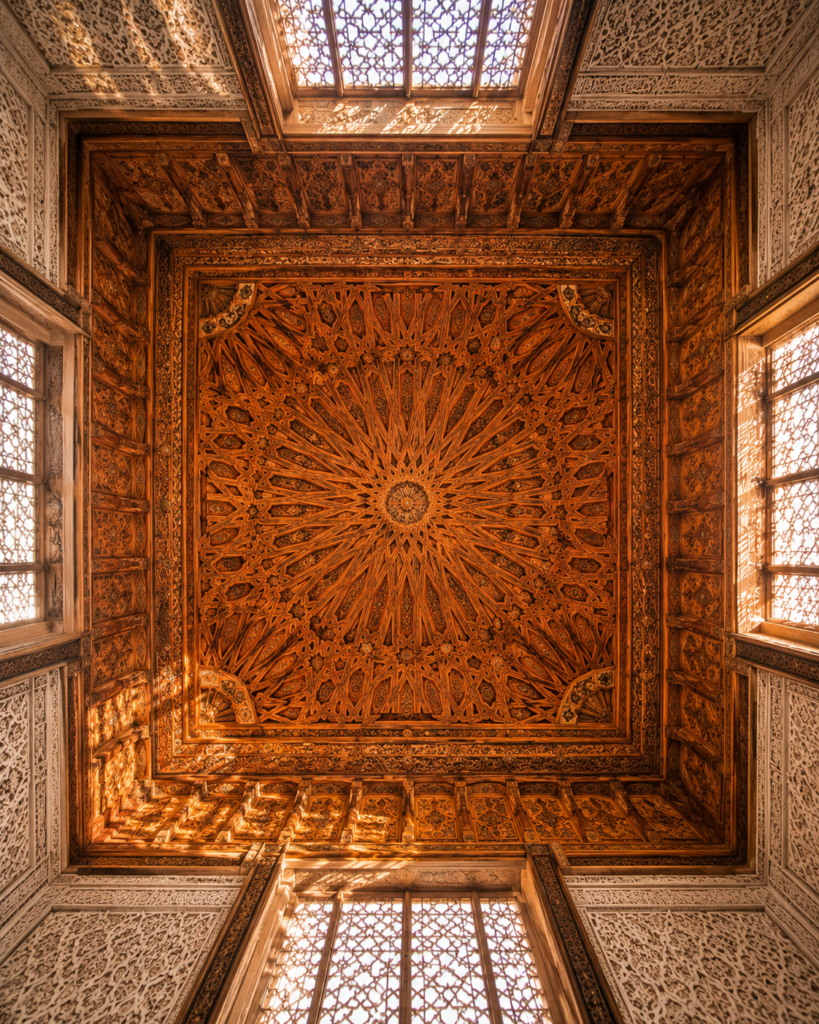
Built in the late 19th century, the Bahia Palace was designed to be the greatest palace of its time — and walking through its painted cedar ceilings, zellij-tiled courtyards, and fragrant orange gardens, it is hard to argue otherwise. Allow 45–60 minutes. Go early morning to avoid tour groups.
Entry: 70 MAD
Badi Palace
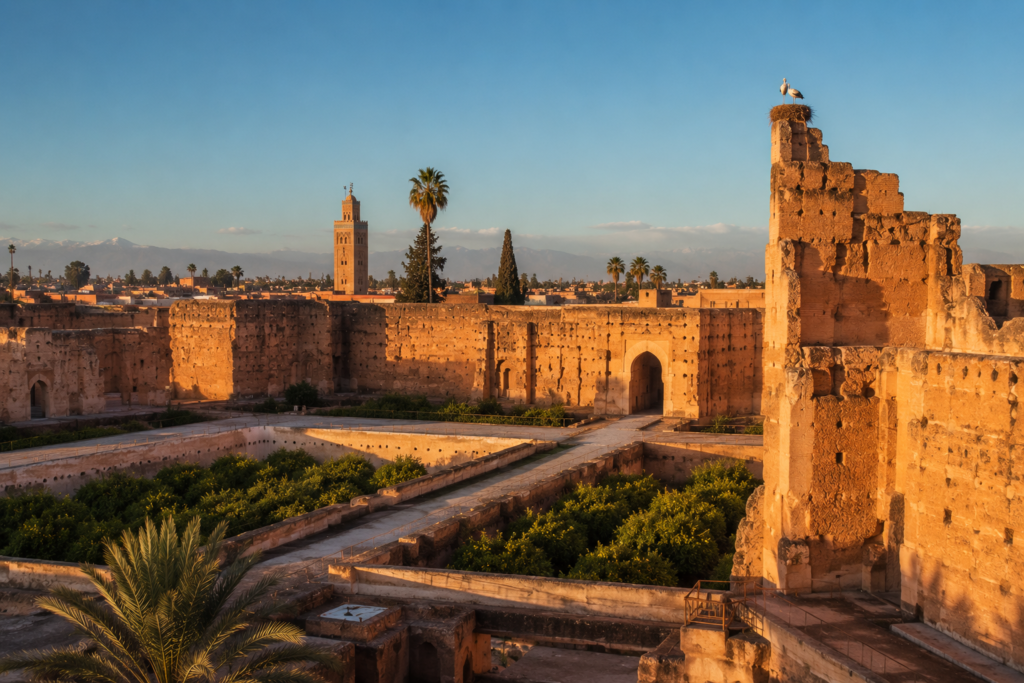
The ruined 16th-century palace of Sultan Ahmed el-Mansour is now a magnificent open-air ruin — crumbling pisé walls, stork nests on every parapet, and a vast central basin that once held an island. The storks are year-round residents and impossibly photogenic against the pale pink walls. The rooftop terrace offers excellent views of the Medina.
Entry: 70 MAD
Saadian Tombs
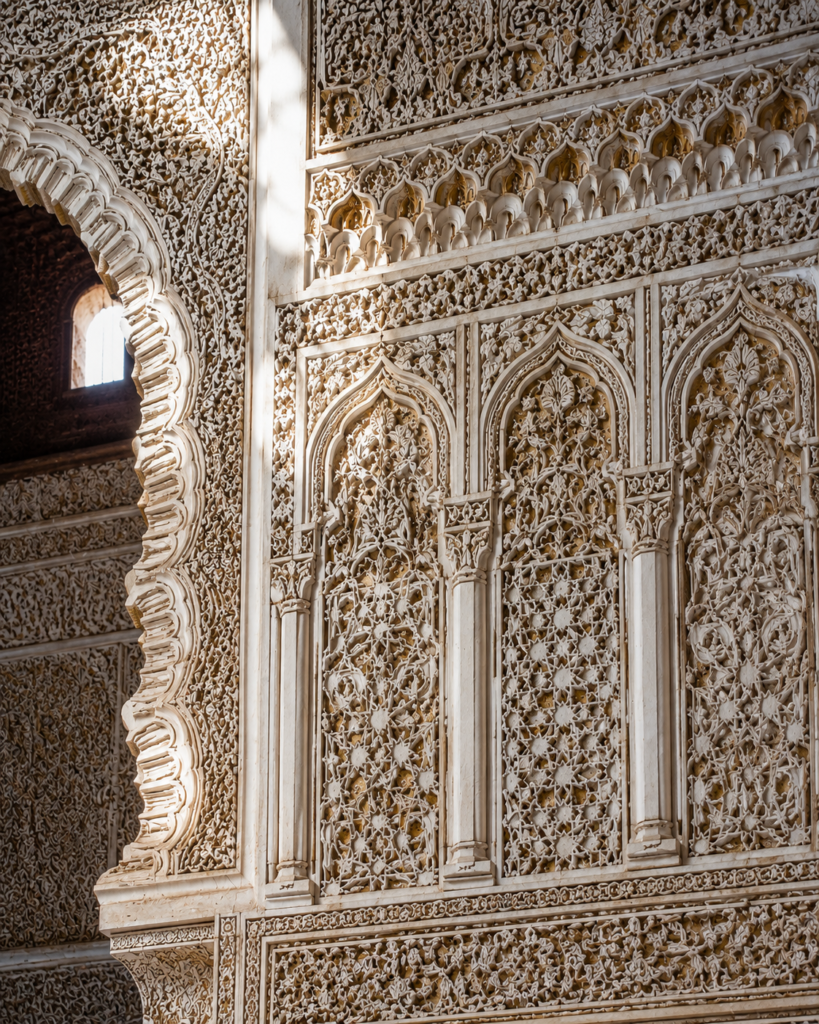
Discovered in 1917 behind a sealed wall — hidden for centuries by a Saadian sultan who wanted no trace of his predecessor — the tombs contain the elaborately decorated mausoleums of the Saadian dynasty. The carved plasterwork and cedar ceilings inside the main chamber are among the finest examples of Moroccan decorative art anywhere. Go first thing in the morning — the site is small and queues build quickly.
Entry: 70 MAD
Musée de Marrakech
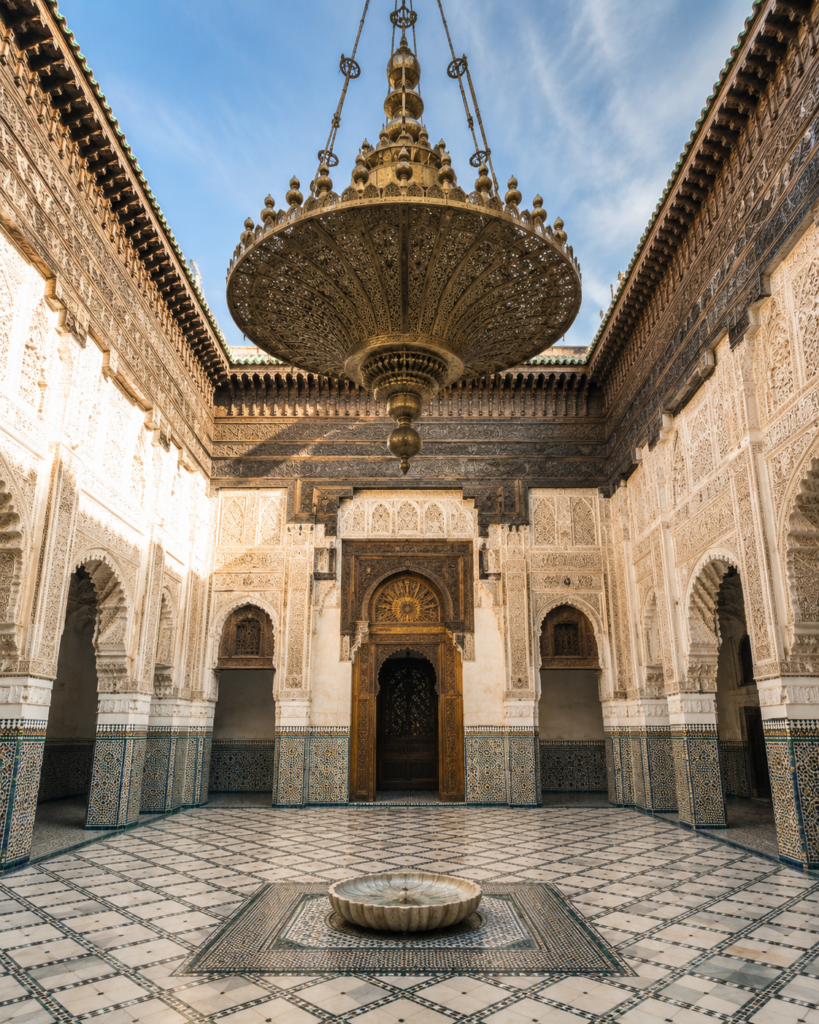
Housed in a beautifully restored 19th-century palace in the heart of the souks, this museum combines a permanent collection of Moroccan art and crafts with temporary exhibitions. The central courtyard — hung with an enormous brass chandelier and filled with natural light — is one of the most beautiful interior spaces in the Medina.
Entry: 50 MAD
Maison de la Photographie
A privately run photography museum occupying a restored riad near the tanneries, with an extraordinary collection of historical photographs of Morocco from the 1870s to the 1950s. The rooftop café has excellent Atlas Mountain views. Consistently one of the most rewarding cultural experiences in Marrakech.
Entry: 50 MAD
Where to Eat in the Medina
For Traditional Moroccan Food
Nomad (near Rahba Kedima) — Contemporary Moroccan cuisine on a beautiful rooftop terrace. The lamb pastilla and the rooftop views are both exceptional. Book ahead.
Café des Épices — A relaxed terrace café overlooking the spice square. Simple salads, tagines, and fresh juices. Perfect for lunch mid-souk.
Le Jardin — Hidden garden restaurant near the Mouassine Fountain. One of the most beautiful dining spaces in the Medina — a riad garden packed with greenery, cats, and good food.
For Breakfast
Kaowa — A tiny, excellent café near the Mouassine neighborhood serving proper coffee, fresh pastries, and a genuinely calm atmosphere. A small miracle in the Medina.
Street Food at Djemaa el-Fna
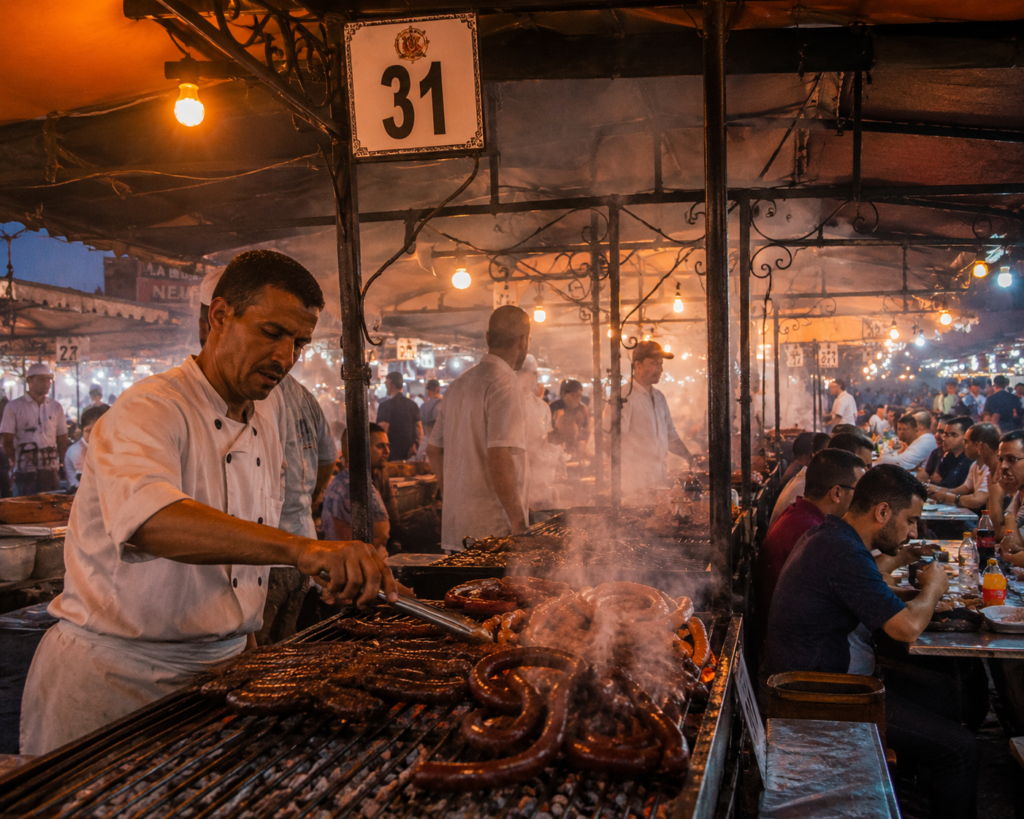
The evening food stalls at Djemaa el-Fna are an experience worth having at least once. Stall numbers are displayed — choose a busy one, make eye contact with the host, and take a seat. Harira soup, merguez sausages, grilled kefta, snails in broth, sheep’s head (for the adventurous) — the selection is vast. Agree on prices before ordering to avoid inflated end-of-meal bills.
Getting Around the Medina
On foot: The only real way to experience the Medina. Allow more time than you think you need for every journey.
Petit taxis: The small orange taxis of Marrakech cannot legally enter the Medina’s narrow streets, but will drop you at the main gates. Agree on a price or insist on the meter before getting in.
Calèches: Horse-drawn carriages operate around the Medina walls and can be a lovely way to arrive at or depart from the Medina. Negotiate the price firmly before departing.
On a guided tour: For first-timers who want context before independent exploration, a half-day guided walk with a licensed guide is genuinely worthwhile. A good guide will show you corners of the Medina you would never find alone and provide historical context that transforms what you see.
Safety and Common Scams to Know About
The Marrakech Medina is generally very safe, including at night in the main areas. The vast majority of people you meet will be friendly, helpful, and genuinely hospitable. That said, a few common situations are worth knowing about:
The “helpful guide” approach: Someone offers to show you to a specific shop, mosque, or attraction “for free” and then expects a significant tip at the end or leads you to a shop where they earn a commission on your purchases. Politely decline unsolicited guidance.
The snake charmer photograph: If you photograph a snake charmer or trained monkey at Djemaa el-Fna, you will be asked for payment. This is fair — they are performers earning a living. Simply be aware before you raise your camera.
Inflated prices in tourist-facing restaurants: Restaurants with large picture menus in multiple languages directly adjacent to Djemaa el-Fna tend to charge significantly more than quality equivalents a few streets away. Walk two minutes in any direction and prices drop noticeably.
Henna artists: Women offering free henna designs are not offering them for free. Agree on a price before any henna touches your skin.
None of these are reasons for anxiety — they are simply part of navigating any major tourist destination with awareness and good humor.
Getting Lost: The Best Thing That Will Happen to You
Here is the thing about the Marrakech Medina that no map can tell you: the best moments happen when you stop following one.
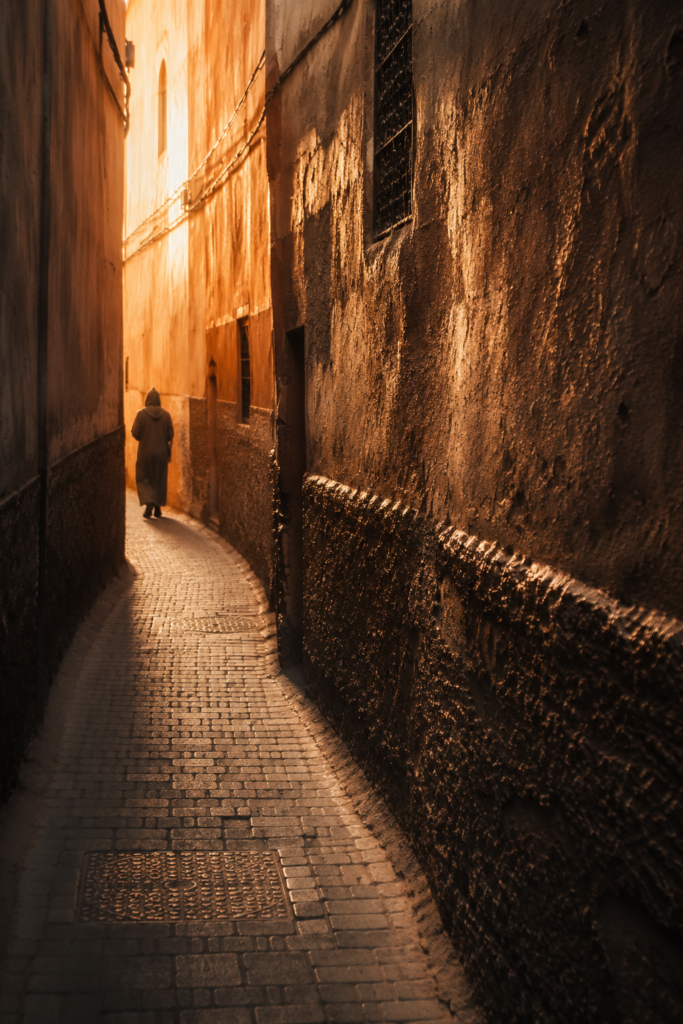
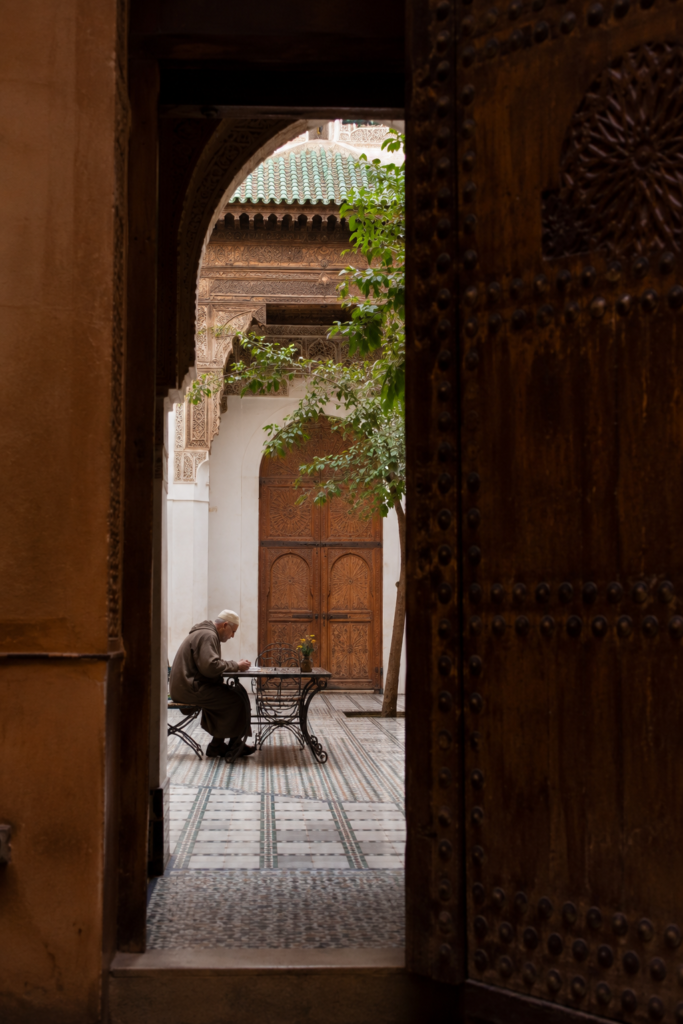
The courtyard you stumble into when you take a wrong turn and find an old man playing chess alone. The tiny bakery that has been making the same bread since before your parents were born, where the owner lets you watch the wood-fired oven for a moment before you carry on. The dead-end alley that opens unexpectedly onto a view of the Koutoubia at the precise moment the sun breaks through clouds and makes everything gold.
The Medina rewards curiosity more than any other city quality. It rewards people who slow down, look up, wander without purpose, and say yes to the unexpected.
Go in knowing enough to feel safe and grounded. Then put the map away and follow the sound of the guembri, the smell of the cumin, the cat disappearing around the corner.
It knows where it is going.
First visit to Marrakech? Drop your questions in the comments and we will do our best to help. And if you have a Medina moment that stopped you in your tracks, we would love to hear about it.