
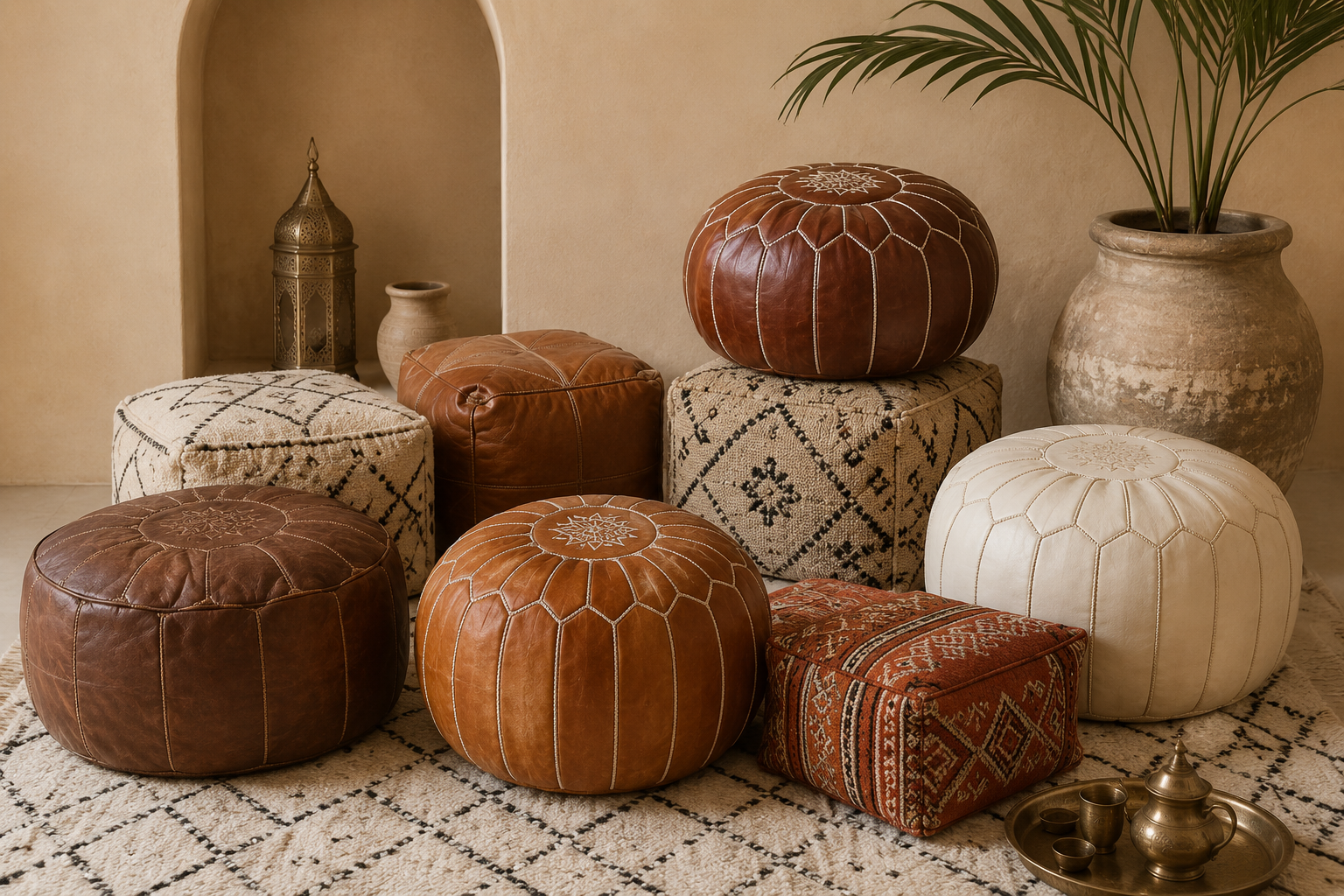
The Moroccan pouf—an unassuming, hand-stitched ottoman—carries within its leather panels centuries of North African craft, social ritual, and regional identity. Once primarily a functional object in Moroccan homes and nomadic camps, the pouf has emerged in the 21st century as a centerpiece of global interior styling, prized for its artisanal authenticity, tactile richness, and versatile form. This post traces the pouf’s history and cultural significance, outlines the traditional materials and craftsmanship behind it, examines regional variations, and explains how it became a staple of contemporary boho decor.
A Brief History and Cultural Significance Poufs have roots in the domestic life of Amazigh (Berber) and Arab communities across Morocco and the Maghreb. Historically, low seating and floor-level furnishings suited the region’s social customs—communal meals, tea rituals, storytelling—and portable poufs fit a lifestyle that included seasonal migrations and multifunctional rooms. Poufs were not merely furniture; they signified domestic hospitality and were sometimes used as dowry items or gifts marking major life events.
The pouf’s aesthetic—geometric embroidery, hand-tooled leather, and bold color contrasts—reflects local symbolism and material availability. Motifs could indicate tribal affiliation, regional identity, or the artisan’s personal signature. Over generations, these objects accumulated layers of meaning: practical, ceremonial, and symbolic.
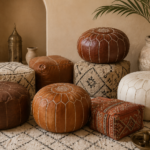
Traditional Materials and Craftsmanship Classic Moroccan poufs are typically crafted from high-quality goat or cow leather, prized for its durability and ability to take dye. The process begins with tanning and dyeing hides in small workshops. Artisans cut patterns for the top, base, and side panels, often using a central star or octagon motif on the top as a compositional anchor.
Stitching is done by hand with durable waxed thread, and seams are reinforced for everyday use. Filling materials traditionally ranged from sheep’s wool and cotton batting to recycled textiles—reflecting resourcefulness and sustainability. In some regions, poufs were stuffed tightly to create firm seating; in others, softer fillings were preferred for lounging.
Beyond leather, embroidered textile poufs emerged as complementary expressions—wool or cotton panels embroidered with local stitches, sometimes incorporating sequins or metallic threads for ceremonial pieces. These textile variants were more common in cooler, mountainous regions where weaving traditions were strong.
Regional Variations Moroccan poufs are not monolithic; regional styles betray local materials, climate, and cultural aesthetics.
- Fez and Fes-Meknes region: Known for finely tanned, soft leather and precise, symmetrical stitching. Color palettes often favor natural browns and deep leathers with subtle tooling.
- Marrakech and High Atlas areas: Bold dyes, hand-painted leather, and dramatic geometric motifs. Marrakech workshops produce poufs with a slightly more decorative flair suitable for market trade.
- Rif and northern regions: Textile-poufs with complex wool embroidery, influenced by Andalusian and Mediterranean craft exchanges.
- Saharan and southern zones: Use of recycled textiles and sturdy construction to meet nomadic needs; patterns may be simpler but highly functional.
These regional differences make poufs attractive to collectors and designers who prize provenance as much as appearance.
From Local Craft to Global Boho Staple Several converging forces propelled the pouf from Moroccan homes into living rooms worldwide. Increased travel and cultural exchange in the 20th century introduced Western designers to North African interiors. In the late 20th and early 21st centuries, a global appetite for handcrafted, ethically sourced goods amplified interest in artisanal furniture. The pouf’s compact form, portability, and sculptural silhouette suited modern, flexible living spaces, while its handcrafted story resonated with consumers seeking authenticity.
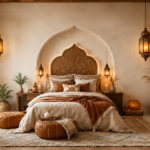
Interior designers and lifestyle publications played a key role, featuring poufs as accent seating, footrests, bedside stools, or coffee-table anchors. The rise of “boho” aesthetics—layered textures, earth tones, and global craft elements—cemented the pouf’s status. Today, the pouf frequently appears in boho decor schemes, bohemian living rooms, and minimalist apartments alike, bridging rustic craft and contemporary design.
Contemporary Adaptations and Ethical Considerations Modern makers have adapted traditional techniques to new markets, offering poufs in varied sizes, colors, and fillings (including eco-foam and synthetic blends). Some workshops partner with fair-trade organizations to ensure artisans receive fair pay and safe working conditions, while others mass-produce machine-stitched imitations that sacrifice craft for cost.
For ethically minded buyers, provenance matters: seek poufs from certified cooperatives or small artisans who disclose materials and labor practices. Authentic leather poufs will show natural variations in hide and hand-stitching marks—features that add character rather than flaws.
Practical Care Tips
- Regular dusting and gentle cleaning: Wipe leather poufs with a dry or slightly damp cloth; avoid harsh detergents. For textile poufs, vacuum with a soft brush attachment.
- Condition leather periodically: Use a leather conditioner once or twice a year to prevent drying and cracking—test on an inconspicuous area first.
- Protect from sun and moisture: Keep poufs out of direct sunlight to prevent fading and avoid prolonged exposure to damp environments to prevent mold or leather damage.
Two Artisan Voices
- “Every pouf carries its maker’s hands—small irregularities are proof of life.” — Fatima, Marrakech leatherworker.
- “We reuse cloth and wool because nothing goes to waste; each piece tells a village story.” — Ahmed, High Atlas embroiderer.
Styling Tips and Placement Ideas
- As extra seating: Use 1–3 poufs clustered near low tables for casual gatherings.
- As a footrest or side table: Place a tray on a firm pouf to create an impromptu surface.
- In small spaces: Replace a bulky armchair with a pouf to save room while adding texture.
- Layer with textiles: Pair a leather pouf with a patterned rug and woven throws to achieve boho decor balance.
The Moroccan pouf encapsulates a living craft tradition—an object that is practical, symbolic, and adaptable. Understanding its regional roots, materials, and techniques enriches our appreciation beyond surface style. Whether sourced from a small Moroccan atelier or adapted by contemporary designers, the pouf remains a tactile bridge between past and present: a seat, a story, and a global design ambassador rolled into one.